

Computing & Data · Artificial Intelligence
28th BANGKOK World Congress on Computational Intelligence, Energy & Industrial Engineering (BCIEIE-27) scheduled on Jan. 25-27, 2027 Bangkok (Thailand)
Dates25–27 Jan 2027
LocationBangkok, Thailand
SubmissionsAbstracts due in 8 weeks (24 Dec)
RegistrationNot listed
FormatHybrid
FieldComputing & Data · Artificial Intelligence
OrganizerNot listed
About & call for papers
Call for papers/Topics All Abstracts, Reviews, short articles, Full articles, Posters are welcomed related with any of the following research fields: 1. Core Computational Intelligence This track covers the core algorithmic frameworks that provide the "brai… Read more
Call for papers/Topics All Abstracts, Reviews, short articles, Full articles, Posters are welcomed related with any of the following research fields: 1. Core Computational Intelligence This track covers the core algorithmic frameworks that provide the "brains" for modern engineering systems. - Neural Networks and Deep Learning - Physics-Informed Neural Networks (PINNs) for modeling physical systems - Recurrent Neural Networks (RNNs) and Long Short-Term Memory (LSTM) for time-series forecasting - Transformers and Large Language Models (LLMs) for industrial documentation and code generation - Evolutionary Computation and Swarm Intelligence - Genetic Algorithms (GA) for multi-objective optimization - Particle Swarm Optimization (PSO) and Ant Colony Optimization (ACO) - Differential Evolution (DE) for complex engineering design spaces - Fuzzy Logic and Multi-Criteria Decision-Making - Fuzzy control systems for handling operational uncertainty - Type-2 fuzzy systems for highly non-linear environments - Rough sets and granular computing - Reinforcement Learning (RL) - Deep Q-Networks (DQN) for sequential decision-making - Actor-Critic models for continuous control in robotics and machinery - Multi-agent reinforcement learning (MARL) for decentralized systems 2. Energy Engineering This track covers the physical infrastructure, thermodynamic principles, and generation mechanisms of energy systems. - Renewable Energy Generation - Photovoltaic (PV) cell physics, tracking systems, and materials - Wind turbine aerodynamics, offshore structures, and mechanical drivetrains - Bioenergy, green hydrogen production, and geothermal systems - Power Systems and Grid Infrastructure - High-Voltage Direct Current (HVDC) transmission - Substation automation and protection relays - Grid stability, power quality, and reactive power compensation - Energy Storage Technologies - Lithium-ion, solid-state, and flow battery chemistry - Pumped-storage hydropower and compressed air energy storage (CAES) - Thermal energy storage (TES) for industrial processes - Thermal and Fluid Systems - Advanced thermodynamics and heat exchanger design - Carbon Capture, Utilization, and Storage (CCUS) technologies - Co-generation and poly-generation plants 3. Industrial Engineering This track focuses on the optimization of complex processes, logistics, human systems, and manufacturing operations. - Operations Research and Optimization - Linear, integer, and non-linear programming - Stochastic modeling and queuing theory - Network flow models and graph theory applications - Production Planning and Control - Material Requirements Planning (MRP) and Enterprise Resource Planning (ERP) - Just-In-Time (JIT) and Lean manufacturing methodologies - Shop-floor scheduling and assembly line balancing - Supply Chain and Logistics Management - Facility location selection and warehouse layout design - Vehicle Routing Problems (VRP) and fleet management - Inventory control theory and global logistics network design - Quality Engineering and Reliability - Six Sigma, Statistical Process Control (SPC), and Total Quality Management (TQM) - Failure Mode and Effects Analysis (FMEA) - Life-cycle analysis and system reliability modeling 4. Computational Intelligence + Energy Engineering (Interrelated) This intersection focuses on using smart algorithms to manage the volatility, physics, and deployment of energy assets. - Smart Grid Analytics and Forecasting - AI-driven net-load forecasting (combining load and behind-the-meter solar) - Deep learning for ultra-short-term wind power ramp forecasting - Fuzzy-logic-based state estimation in distribution grids - Intelligent Energy Storage Management - Reinforcement learning for optimal battery charging/discharging cycles - Neural network estimators for State of Health (SoH) and State of Charge (SoC) - Machine learning for battery thermal runaway prediction - Microgrid and Virtual Power Plant (VPP) Control - Multi-agent systems for decentralized microgrid energy balancing - Genetic algorithms for optimal sizing and placement of distributed energy resources - Deep RL for real-time bidding strategies of VPPs in electricity markets 5. Computational Intelligence + Industrial Engineering (Interrelated) This intersection deals with embedding intelligence into factories, supply chains, and operational workflows (Industry 4.0/5.0). - Smart Manufacturing and Cyber-Physical Systems - Computer vision for real-time automated quality inspection on assembly lines - Reinforcement learning for dynamic, real-time job-shop scheduling - Digital Twins powered by real-time machine learning data streams - Intelligent Logistics and Supply Chain AI - Heuristics and swarm intelligence for solving dynamic Vehicle Routing Problems - Machine learning for demand sensing and predictive inventory management - Natural Language Processing (NLP) for automated supplier contract analysis - Predictive Maintenance and Diagnostics - Deep learning anomalies detection in vibration, acoustic, and thermal sensor data - Survival analysis and machine learning for Remaining Useful Life (RUL) estimation - Fuzzy expert systems for root-cause failure diagnostics 6. Energy Engineering + Industrial Engineering (Interrelated) This intersection focuses on the operational efficiency, sustainability, and management of energy within industrial plants. - Industrial Energy Management Systems (IEMS) - Waste heat recovery optimization in manufacturing plants - Energy-conscious scheduling of high-power industrial machinery - Peak-shaving and load-shifting strategies for manufacturing facilities - Sustainable Supply Chains and Circular Economy - Green logistics and carbon-footprint minimization in freight transport - Reverse logistics for recycling, remanufacturing, and battery second-life processing - Life Cycle Assessment (LCA) integrated into product design workflows - Facility Energy Efficiency - HVAC optimization for large-scale industrial warehouses and cleanrooms - Co-optimization of water and energy networks in process industries (Pinch Analysis) 7. The Three-Way Nexus: CI + Energy + Industrial Engineering This represents the ultimate convergence, where intelligent algorithms optimize industrial operations precisely around energy constraints, market prices, and sustainability targets. - Demand Response Optimization - Using reinforcement learning to automatically adjust a factory's production schedule based on real-time electricity pricing and grid stress signals. - Smart Asset Lifecycle and Operations Management - Combining industrial reliability engineering with energy asset physics and CI algorithms to schedule predictive maintenance for wind farms or solar arrays, minimizing downtime during peak generation windows. - Decarbonized Industrial Cluster Co-Optimization - Deploying swarm intelligence and multi-agent RL to coordinate energy generation, carbon capture systems, hydrogen production, and manufacturing output across an entire localized industrial park.
Key dates
Abstract submission closesPresenters24 Dec 2026AoE
Add abstract submission closes to calendar
Full paper submissionPresenters24 Dec 2026AoE
Add full paper submission to calendar
ConferenceEveryone25–27 Jan 2027
Add the conference to calendar
Closing dates are Anywhere on Earth (AoE) unless the organizer stated otherwise.
Venue
ibis Bangkok Sukhumvit 4
41 Sukhumvit Road Soi 4, Klongtoey, Watthana, 10110, BANGKOK – THAILAND
Bangkok, Thailand
Open ibis Bangkok Sukhumvit 4 in maps ↗The address is as the organizer gave it, and it is not checked against a map.
Similar conferences
Computing & Data · Artificial Intelligence
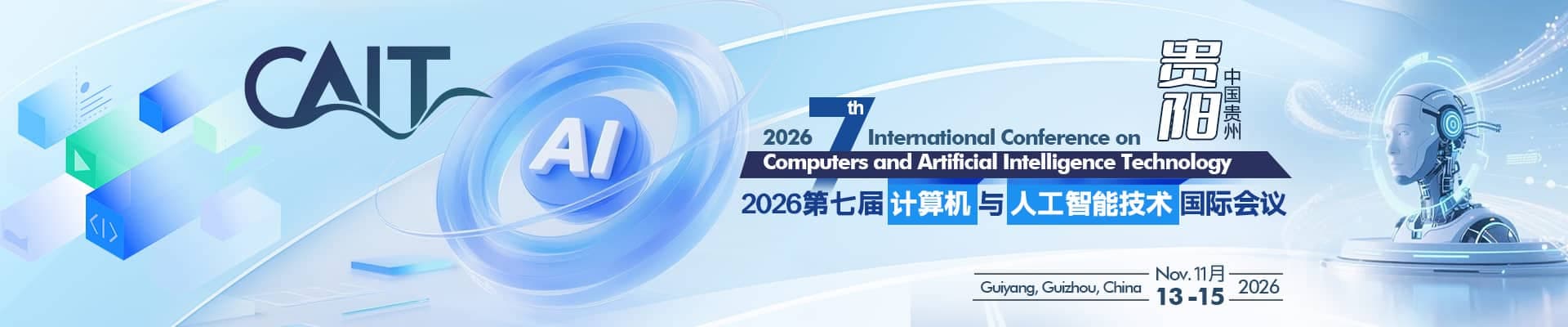
7th International Conference on Computers and Artificial Intelligence Technology (CAIT 2026)
Recurring

Computing & Data · Artificial Intelligence
Artificial intelligence and digital health conference 2026

Computing & Data · Artificial Intelligence
2nd International Conference on Artificial Intelligence Security and Governance (ICAISG 2026)
Recurring
Frequently asked
When is the 28th BANGKOK World Congress on Computational Intelligence, Energy & Industrial Engineering (BCIEIE-27) scheduled on Jan. 25-27, 2027 Bangkok (Thailand) submission date?
Abstracts due: 24 Dec 2026 (AoE). Submission happens on the conference's own site.
Where is 28th BANGKOK World Congress on Computational Intelligence, Energy & Industrial Engineering (BCIEIE-27) scheduled on Jan. 25-27, 2027 Bangkok (Thailand) held?
At the ibis Bangkok Sukhumvit 4, Bangkok, Thailand, with remote attendance offered as well.
Can I attend 28th BANGKOK World Congress on Computational Intelligence, Energy & Industrial Engineering (BCIEIE-27) scheduled on Jan. 25-27, 2027 Bangkok (Thailand) remotely?
Yes — 28th BANGKOK World Congress on Computational Intelligence, Energy & Industrial Engineering (BCIEIE-27) scheduled on Jan. 25-27, 2027 Bangkok (Thailand) is hybrid, so remote attendance is offered alongside the venue.