Physical Sciences · Astronomy & Astrophysics
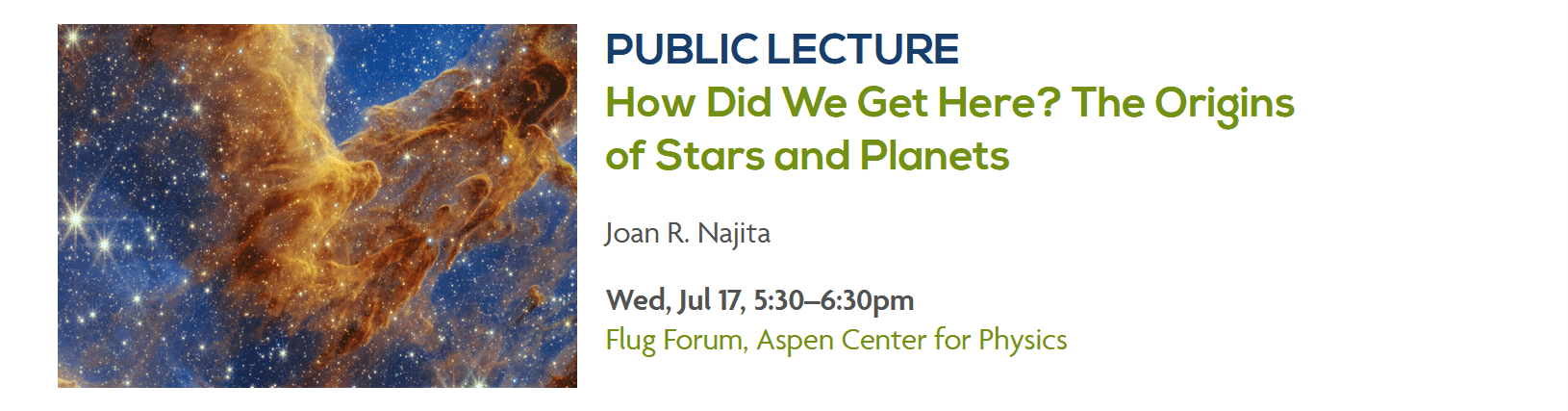
How Did We Get Here? The Origins of Stars and Planets
Part of the How Did We Get Here? The Origins of Stars and Planets series →
Dates17–17 Jul 2024
LocationAspen, Colorado, United States
SubmissionsNot listed
RegistrationClosed
FormatIn person
FieldPhysical Sciences · Astronomy & Astrophysics
OrganizerNot listed
About & call for papers
While stars and planets are thought to arise in molecular clouds, from flattened disks of interstellar matter, the transformation process is complex, spanning many orders of magnitude and involving many physical processes. From a theoretical perspective alone,… Read more
While stars and planets are thought to arise in molecular clouds, from flattened disks of interstellar matter, the transformation process is complex, spanning many orders of magnitude and involving many physical processes. From a theoretical perspective alone, it’s often unclear how the ideas fit together, a situation that leaves open many ways for things to go wrong. So how does this transformation really work? Observations with powerful space telescopes and Earth-based facilities are providing vital clues. By studying the birthplaces of planets as well as planetary systems orbiting stars beyond the Sun, we’ve gleaned new insights, while also raising new questions that challenge us. Najita will describe our current picture of the origins of stars and planets, the new insights gained, and the challenges we face. She’ll also comment on what the results say about how humans make scientific advances and the kinds of investments that are vital to sustaining discovery.
Venue
Flug Forum, Aspen Center for Physics
Aspen, Colorado, United States
Open Flug Forum, Aspen Center for Physics in maps ↗No street address is on file for this listing — what the organizer gave is above. Suggest the venue address →
Similar conferences
Physical Sciences · Astronomy & Astrophysics
5th International Summit on Gravitation, Astrophysics and Cosmology
Physical Sciences · Astronomy & Astrophysics
World Conference on Astronomy, Astrophysics, and Space Science (WCAAS-2027)
Physical Sciences · Astronomy & Astrophysics
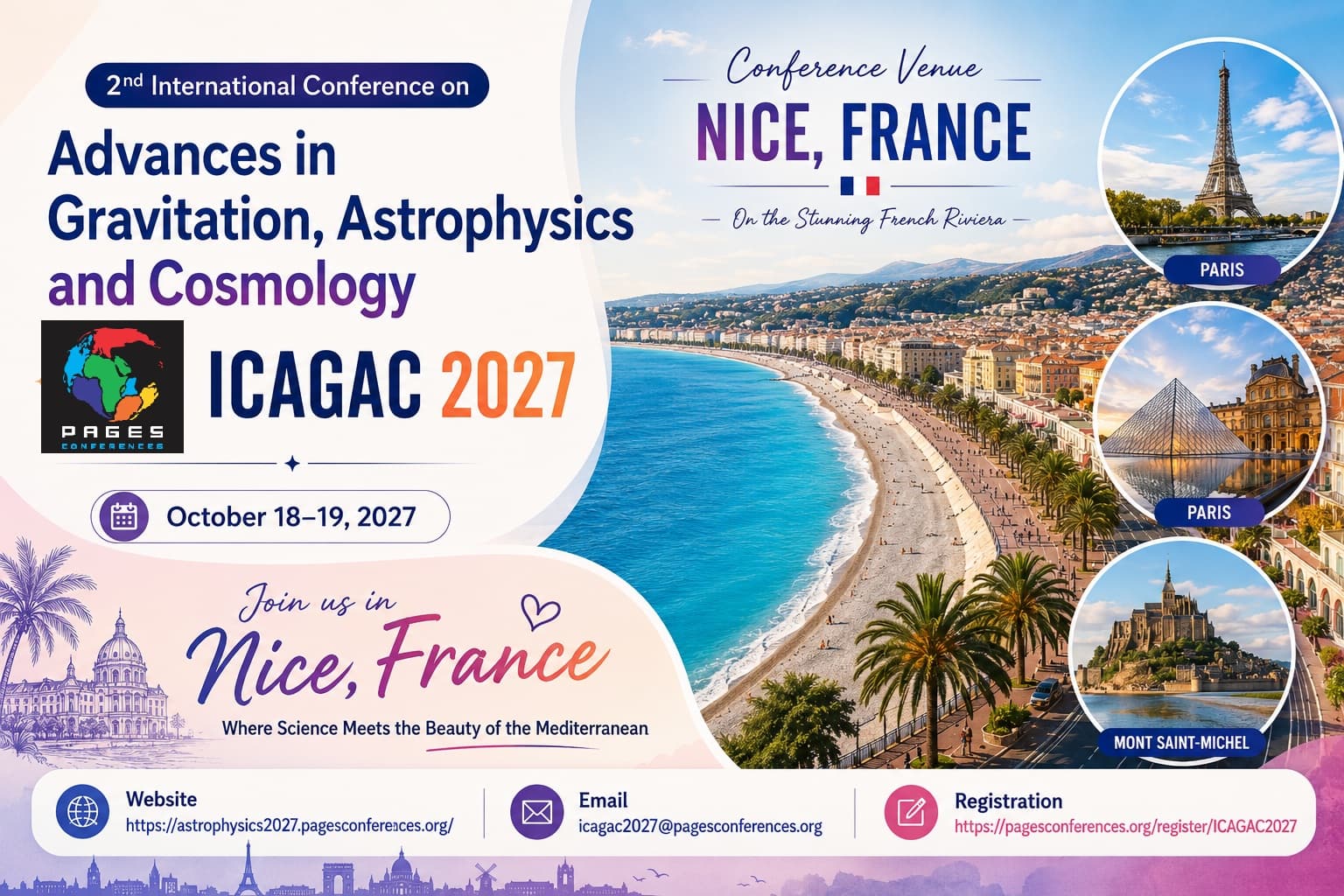
2nd International Conference on Advances in Gravitation, Astrophysics and Cosmology (ICAGAC2027)
Frequently asked
When is the How Did We Get Here? The Origins of Stars and Planets submission date?
This edition has ended. The series page shows whether a newer edition is accepting submissions.
Where was How Did We Get Here? The Origins of Stars and Planets held?
It was held at the Flug Forum, Aspen Center for Physics, Aspen, Colorado, United States.
Can I attend How Did We Get Here? The Origins of Stars and Planets remotely?
No — this edition is listed as in person only.