Social & Behavioural Sciences · Communication & Media
8th World Conference on Media and Communication (WORLDCMC)
Recurring
Part of the International Conference on Communication and Media Studies series →
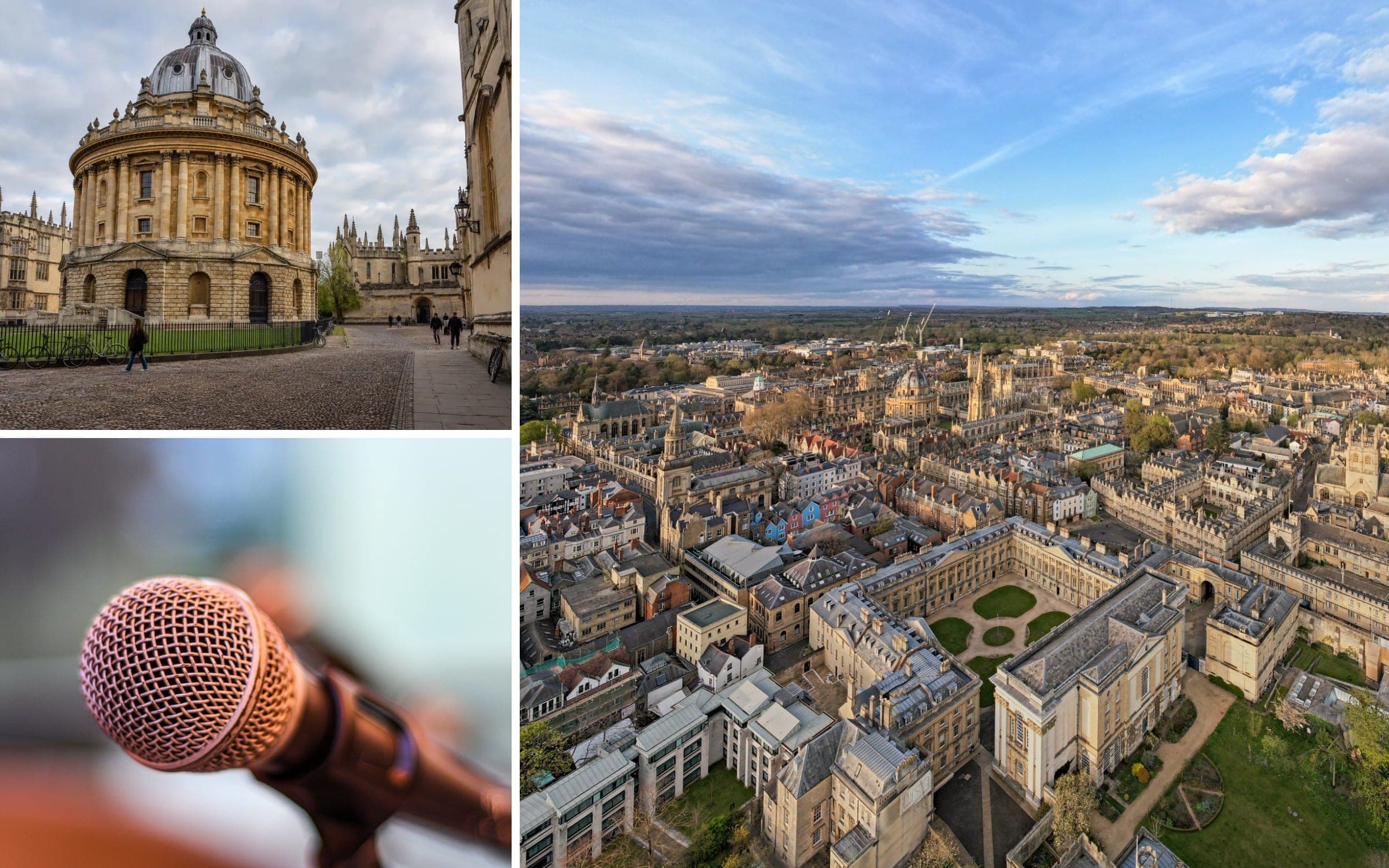
What happens to news, trust and public conversation when platforms rank what we see and generative AI writes some of it? The International Conference on Communication and Media Studies (CMCONF) brings that question, and many others, to Oxford for three days. It is held at Saïd Business School on Park End Street, right across from the railway station, and it welcomes researchers, educators, journalists and communication professionals at every career stage. Presenters can speak in person, bring a poster or present live online, and anyone can attend in Oxford as a listener.
The scope runs across ten theme groups and nearly 150 listed topics. Journalism scholars will find sessions on newsroom practice, data and automated journalism, press freedom and fact-checking; platform researchers on algorithmic curation, content moderation, deepfakes and AI companions. There is space for audience research and fan cultures, representation of gender, race and disability, advertising, public relations and creator economies, media law, privacy and copyright, film, television, podcasting and games, media literacy education, and health, climate and crisis communication. Theoretical, historical, computational and practice-based work are all in scope, and studies with null results are explicitly welcome.
Every abstract goes through double-blind review overseen by the scientific committee and is screened with iThenticate. Accepted and registered abstracts are published in an abstract book with an ISBN; full papers sent after the conference can enter the proceedings, which carry an ISSN and Crossref DOIs, and selected papers may be pointed towards journal or monograph opportunities.
In-person registration covers lunch, coffee breaks and refreshments, a certificate, conference photos and a free guided tour of Oxford, whose colleges, libraries and riverside paths are a short walk from the venue.
Abstracts are invited on any area of communication and media studies across ten theme groups (147 topics): theory and methods, audiences and identity, journalism and news, digital platforms and AI, media industries and strategic communication, intercultural and development communication, media law and ethics, film and creative media, media literacy, and health, science and crisis communication. Empirical, theoretical, computational, qualitative and practice-based work is welcome. Submit an abstract online and choose oral, poster or live virtual presentation; double-blind review with decision in 7–14 business days. Full papers are optional, for the proceedings.
Closing dates are Anywhere on Earth (AoE) unless the organizer stated otherwise.
Early-bird rates apply until 11 Jan 2027.
| Category | In person | Online |
|---|---|---|
| Student presenter – early (until 11 Jan 2027) | £245 | — |
| Student presenter – late (until 4 May 2027) | £275 | — |
| Regular presenter – early (until 11 Jan 2027) | £265 | — |
| Regular presenter – late (until 4 May 2027) | £295 | — |
| Virtual presentation – early (until 11 Jan 2027) | — | £100 |
| Virtual presentation – late (until 4 May 2027) | — | £120 |
| Co-author (in person) – early (until 11 Jan 2027) | £120 | — |
| Co-author (in person) – late (until 4 May 2027) | £140 | — |
| Listener – early (until 11 Jan 2027) | £120 | — |
| Listener – late (until 4 May 2027) | £140 | — |
Rates are shown in the currency the organizer set them in.
Park End Street, Oxford OX1 1HP, United Kingdom
Oxford, United Kingdom
Open Saïd Business School in maps ↗The address is as the organizer gave it, and it is not checked against a map.
Social & Behavioural Sciences · Communication & Media
Recurring
Social & Behavioural Sciences · Communication & Media
Social & Behavioural Sciences · Communication & Media
Recurring
Social & Behavioural Sciences · Communication & Media
Recurring