Earth & Environment · Waste Management & Recycling
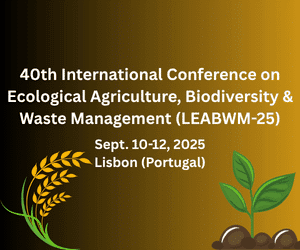
40th International Conference on Ecological Agriculture, Biodiversity & Waste Management (LEABWM-25)
Dates10–12 Sept 2025
LocationLisbon, Portugal
SubmissionsNot listed
RegistrationClosed
FormatIn person
FieldEarth & Environment · Waste Management & Recycling
OrganizerNot listed
About & call for papers
TOPICS So, Topics of interest for submission include, but are not limited to: I. Ecological Agriculture: Fostering Sustainability This pillar explores farming systems that work in harmony with nature. A. Soil Health and Fertility: - Regenerative Agricultu… Read more
TOPICS So, Topics of interest for submission include, but are not limited to: I. Ecological Agriculture: Fostering Sustainability This pillar explores farming systems that work in harmony with nature. A. Soil Health and Fertility: - Regenerative Agriculture Practices: No-till farming, cover cropping, diverse crop rotations, and their impact on soil structure, carbon sequestration, and water retention. - Organic Farming Systems: Principles, practices, certification, and the latest research in organic crop and livestock production. - Agroecology: Integrating ecological principles into farm management, focusing on natural processes, biodiversity enhancement, and reduced external inputs. - Biofertilizers and Biopesticides: Exploring the effectiveness and application of microbial inoculants, compost teas, and natural pest control methods. - Soil Microbiome and Plant Health: Understanding the complex interactions in the soil and how to manage them for improved plant resilience and nutrient uptake. - Carbon Farming: Strategies for maximizing carbon sequestration in agricultural soils and its role in climate change mitigation. - Precision Agriculture for Ecological Goals: Utilizing technology (GPS, sensors, data analytics) to optimize resource use and minimize environmental impact in ecological farming. - Water Management in Ecological Agriculture: Efficient irrigation techniques, rainwater harvesting, and strategies for maintaining water quality in agroecosystems. - Nutrient Cycling and Management: Natural methods for nutrient provision, reducing reliance on synthetic fertilizers and minimizing nutrient runoff. B. Crop and Livestock Production: - Agrobiodiversity and Crop Genetic Resources: Conservation and utilization of diverse crop varieties, including heritage and local breeds, for resilience and nutritional value. - Ecological Pest and Disease Management: Integrated Pest Management (IPM) strategies, biological control, and fostering natural enemies of pests. - Agroforestry Systems: Integrating trees and shrubs into farming systems for multiple benefits, including soil conservation, carbon sequestration, and habitat provision. - Pasture-Based Livestock Systems: Rotational grazing, silvopasture, and the ecological benefits of well-managed grazing lands. - Animal Welfare in Ecological Agriculture: Ethical considerations and practices in raising livestock in environmentally sound systems. - Climate-Resilient Agriculture: Adapting farming practices to cope with climate change impacts such as droughts, floods, and extreme weather events. - Vertical Farming and Urban Agriculture (Ecological Approaches): Exploring sustainable methods for food production in urban environments. C. Socio-economic Aspects of Ecological Agriculture: - Local Food Systems and Short Supply Chains: The role of ecological agriculture in strengthening local economies and reducing the environmental footprint of food distribution. - Fair Trade and Ethical Considerations: Ensuring fair prices for farmers and promoting equitable labor practices in ecological agriculture. - Policy and Support Mechanisms for Ecological Transition: Examining government policies, subsidies, and research funding needed to support the adoption of ecological farming. - Farmer Knowledge and Participatory Research: The importance of farmer-led innovation and knowledge sharing in advancing ecological agriculture. - Consumer Education and Awareness: Raising public understanding of the benefits of ecological agriculture for health and the environment. II. Biodiversity in Agroecosystems: Enhancing Natural Capital This theme focuses on the vital role of biodiversity within and around agricultural landscapes. A. Functional Biodiversity: - Pollinators in Agriculture: Protecting and enhancing pollinator populations (bees, butterflies, etc.) for crop production and ecosystem health. - Biological Control Agents: Utilizing beneficial insects, predators, and microorganisms to manage pests and diseases naturally. - Soil Biodiversity and Ecosystem Services: The role of soil organisms in nutrient cycling, decomposition, and soil structure. - Predator-Prey Relationships in Agroecosystems: Fostering natural pest regulation through habitat management and biodiversity enhancement. B. Habitat Conservation and Management: - Hedgerows, Buffer Strips, and Field Margins: Their importance for wildlife habitat, connectivity, and soil conservation in agricultural landscapes. - Wetland Restoration and Management in Farmlands: The role of wetlands in water filtration, flood control, and biodiversity conservation. - Agroforestry for Biodiversity: Designing agroforestry systems to maximize habitat provision for various species. - Conservation Agriculture and Wildlife: Exploring farming practices that minimize disturbance to wildlife and their habitats. - Protected Areas and Agricultural Landscapes: The interface between nature reserves and surrounding farmlands, focusing on ecological corridors and buffer zones. C. Monitoring and Assessment of Biodiversity: - Biodiversity Indicators for Agricultural Systems: Developing metrics to assess the health and diversity of life on farms. - Citizen Science and Biodiversity Monitoring: Engaging farmers and the public in collecting data on species presence and abundance. - Remote Sensing and GIS for Biodiversity Assessment: Utilizing technology to monitor habitat changes and biodiversity patterns in agricultural landscapes. - Economic Valuation of Biodiversity in Agriculture: Quantifying the economic benefits of ecosystem services provided by biodiversity. III. Waste Management in Agriculture: Towards a Circular Economy This area addresses the challenges and opportunities of managing waste generated by agricultural activities. A. On-Farm Waste Management: - Composting of Agricultural Waste: Transforming crop residues, animal manure, and other organic materials into valuable soil amendments. - Anaerobic Digestion for Biogas Production: Utilizing agricultural waste to generate renewable energy and nutrient-rich digestate. - Livestock Manure Management: Sustainable practices for storing, treating, and utilizing manure to minimize environmental pollution and maximize nutrient recovery. - Crop Residue Management: Exploring alternatives to burning, such as incorporation into soil, mulching, and bioenergy production. - Management of Plastic Waste in Agriculture: Strategies for reducing the use of plastic films, nets, and other materials, and for recycling or safely disposing of them. - Water Management and Wastewater Treatment on Farms: Sustainable methods for treating wastewater from livestock operations and irrigation runoff. B. Regional and System-Level Approaches: - Circular Economy Models in Agriculture: Designing agricultural systems to minimize waste and maximize resource utilization through closed-loop processes. - Waste Valorization and By-product Utilization: Finding new uses for agricultural waste streams, such as in bio-based materials, animal feed, or energy production. - Industrial Symbiosis in Agro-Food Systems: Collaboration between agricultural producers and other industries to utilize waste streams as resources. - Policy and Regulations for Agricultural Waste Management: Examining the role of government in promoting sustainable waste management practices in the agricultural sector. - Logistics and Infrastructure for Agricultural Waste Collection and Processing: Developing efficient systems for handling and transporting agricultural waste for treatment or valorization. C. Specific Waste Streams: - Management of Pesticide Containers and Other Hazardous Agricultural Waste: Safe handling, storage, and disposal methods. - Food Waste Reduction and Management at the Farm Level: Strategies to minimize food loss during harvesting, storage, and processing. - Slaughterhouse Waste Management: Sustainable disposal and valorization of animal by-products. - Management of Waste from Aquaculture and Fisheries: Addressing the specific waste streams from aquatic food production. Overarching and Cross-Cutting Themes: - The Nexus of Ecological Agriculture, Biodiversity, and Waste Management: Exploring the interconnections and synergies between these three areas for holistic sustainability. - Climate Change Mitigation and Adaptation through Integrated Approaches: How ecological agriculture, biodiversity enhancement, and sustainable waste management can contribute to climate resilience. - The Role of Technology and Innovation: Exploring new technologies and digital solutions for advancing sustainability in agriculture and waste management. - Policy Frameworks and Governance for Sustainable Agriculture and Resource Management: Examining the enabling environment needed to support these transitions. - Social Equity and Justice in Sustainable Food Systems: Ensuring that ecological agriculture, biodiversity conservation, and waste management benefit all stakeholders.
Venue
Colégio Almada Negreiros, Universidade Nova de Lisboa
Faculdade De Direito Da Universidade Nova De Lisboa, Tv. Estêvão Pinto, 1099-032 Lisboa, Portugal
Lisbon, Portugal
Open Colégio Almada Negreiros, Universidade Nova de Lisboa in maps ↗The address is as the organizer gave it, and it is not checked against a map.
Similar conferences
Instead of a past edition
View the seriesInternational Conference on Recycling and Waste Management — 1 editions, most recently 2026
A match in this field was an edition that has ended. The series is suggested in its place, so the recommendation still leads somewhere useful.
Frequently asked
When is the 40th International Conference on Ecological Agriculture, Biodiversity & Waste Management (LEABWM-25) submission date?
This edition has ended. The series page shows whether a newer edition is accepting submissions.
Where was 40th International Conference on Ecological Agriculture, Biodiversity & Waste Management (LEABWM-25) held?
It was held at the Colégio Almada Negreiros, Universidade Nova de Lisboa, Lisbon, Portugal.
Can I attend 40th International Conference on Ecological Agriculture, Biodiversity & Waste Management (LEABWM-25) remotely?
No — this edition is listed as in person only.