Social & Behavioural Sciences · Sociology
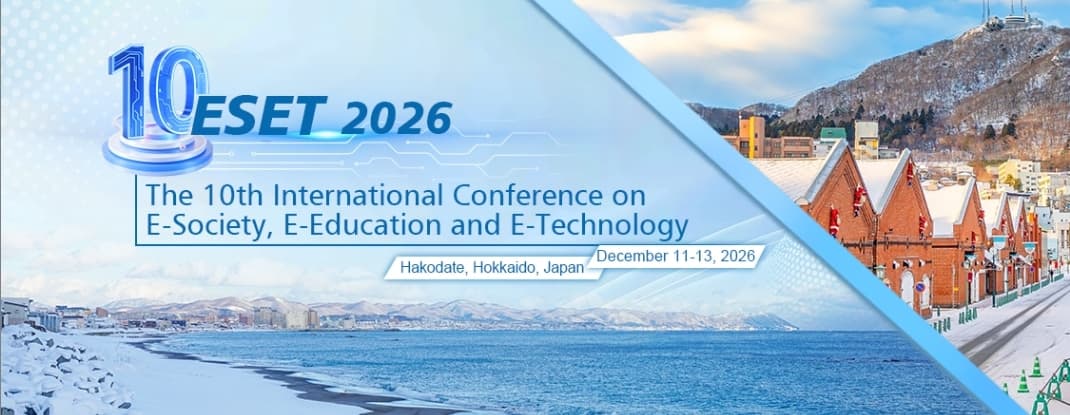
10th International Conference on E-Society, E-Education and E-Technology (ESET 2026)
Recurring
Part of the LISBON World Congress on Humanities & Social Sciences (WCHSS-25) series →
Call for papers/Topics Full Articles/ Reviews/ Shorts Papers/ Abstracts are welcomed in the following research fields: I. Core Disciplines and Their Sub-fields: - Social Sciences: - Sociology: Social movements, inequality, social justice, globalization, crime and deviance, urban sociology, rural sociology, family, religion, education, health, gender, race, social theory. - Psychology: Developmental psychology, cognitive psychology, social psychology, clinical psychology, educational psychology, personality, emotions, mental health, behavioral economics, neuroscience. - Political Science: Democracy, governance, international relations, public policy, political theory, human rights, law enforcement, political movements, comparative politics. - Economics: Economic development, inequality, international finance, labor economics, environmental economics, behavioral economics, public economics, industrial organization. - Anthropology: Cultural anthropology, social anthropology, archaeology, linguistic anthropology, biological anthropology, urban anthropology, organizational anthropology. - Geography: Human geography, cultural geography, environmental geography, urban planning, climate change impacts, sustainable development. - Law: Administrative law, intellectual property, international law, human rights law, criminal justice, environmental law, constitutional law, legal philosophy. - Education: Educational theory, curriculum and instruction, educational technology, higher education, special education, educational psychology, educational policy, history of education, global education. - Humanities: - History: Ancient, medieval, modern, regional histories (African, Asian, European, American, Middle Eastern), social history, economic history, women's history, military history, historiography. - Literature: Literary theory, literary criticism, comparative literature, specific national literatures, literary movements, genres, themes. - Philosophy: Ethics, metaphysics, epistemology, political philosophy, philosophy of mind, philosophy of language, aesthetics, logic, existentialism, postmodernism. - Religious Studies: World religions, contemporary religion and society, philosophy of religion, inter-religious relations, culture and religion, indigenous religions. - Arts & Art History: Art history, artistic movements, art theory, art criticism, visual culture, performance studies, musicology, film studies, drama and theater. - Linguistics: Sociolinguistics, psycholinguistics, applied linguistics, theoretical linguistics, language acquisition, phonetics, phonology, semantics, pragmatics, discourse analysis. - Communication Studies: Media studies, rhetoric, public speaking, interpersonal communication, organizational communication, digital communication, journalism, public relations, political communication. II. Interdisciplinary & Cross-Cutting Themes: - Digital Humanities & Social Sciences: AI for humanity, ethical AI, digital transformation, social media impact, data analysis in humanities, digital archives, computational social science. - Globalization & Transnationalism: Migration, international relations, global challenges (climate change, pandemics), cultural exchange, global studies. - Sustainability & Environment: Environmental humanities, climate change studies, eco-criticism, sustainable development goals, environmental policy. - Identity & Culture: Gender studies, race and ethnicity, cultural studies, indigenous studies, LGBTQ+ studies, postcolonial studies, cultural heritage. - Ethics & Morality: Bioethics, business ethics, political ethics, everyday ethics, the ethics of new technologies. - Health & Well-being: Medical humanities, public health, mental health, social determinants of health, psychology of well-being. - Technology & Society: Impact of technology on social life, human-computer interaction, cyberculture, surveillance, digital citizenship. - Conflict & Peace Studies: Peacebuilding, conflict resolution, transitional justice, security studies, war and society. - Urban & Rural Studies: Urbanization, smart cities, rural development, community studies, social issues in urban/rural areas. - Human-Animal Studies: Representations of animals, animal ethics, human-animal relationships. III. Current Research Trends and Emerging Areas: - AI and its societal implications: Ethical frameworks for AI, AI's impact on labor, decision-making, and social structures, AI in education and research. - Climate change and environmental justice: Social and cultural responses to climate change, equitable adaptation strategies, indigenous knowledge and environmentalism. - Post-truth and disinformation: Media literacy, critical thinking in the digital age, the spread of misinformation and its societal impact. - Mental health and well-being in a changing world: The impact of social media on mental health, community-based mental health initiatives, psychological resilience. - The future of work and labor: Automation, gig economy, changing skills requirements, social protection in the new economy. - Intercultural communication and diversity: Promoting understanding across cultures, managing diversity in organizations and societies, addressing discrimination. - The role of humanities in addressing grand challenges: How insights from history, philosophy, literature can inform solutions to complex contemporary problems. - Behavioral insights and public policy: Applying psychological and economic principles to design effective policies. - Narrative and storytelling: The power of narrative in shaping individual and collective identities, health, and social change. - Digital citizenship and online communities: Rights and responsibilities in digital spaces, the evolution of online social structures.
Av. de Berna, 26 C, 1069-061 Lisboa | Portugal
Lisbon, Portugal
Open Universidade Nova de Lisboa (New University of Lisbon) Conference Room: SE1 in maps ↗The address is as the organizer gave it, and it is not checked against a map.
Social & Behavioural Sciences · Sociology
Recurring
Social & Behavioural Sciences · Sociology
A match in this field was an edition that has ended. The series is suggested in its place, so the recommendation still leads somewhere useful.