Education · Teaching & Learning
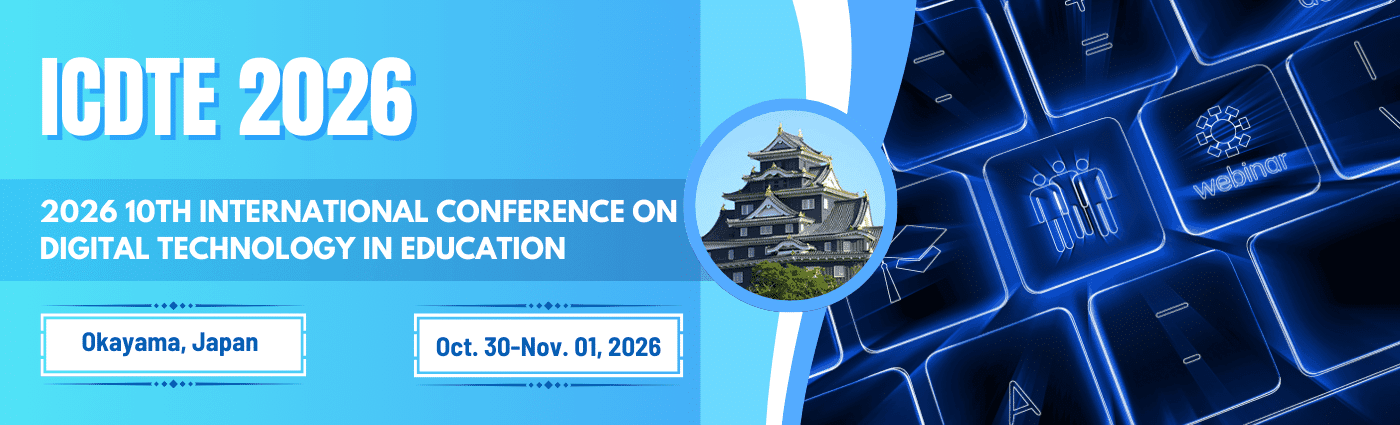
10th International Conference on Digital Technology in Education (ICDTE 2026)
Recurring
Part of the PARIS 4th World Conference on Studies on Education, Teaching & Technology series →
Call for papers/Topics All Abstracts, Reviews, short articles, Full articles, Posters are welcomed related with any of the following research fields: Part 1: Independent Domains These topics represent the core foundational principles of each individual field before they are integrated with the others. 1. Education (Foundations & Systems) - Philosophy of Education: Perennialism, essentialism, progressivism, and reconstructionism. - Sociology of Education: Social stratification, educational equity, institutional roles, and cultural reproduction. - Educational Policy and Governance: Funding mechanisms, standardization, national vs. local curricula, and legislative frameworks. - Comparative Education: International schooling systems, global literacy initiatives, and cross-border educational benchmarks. 2. Teaching (Pedagogy & Practice) - Learning Theories: Behaviorism, cognitivism, constructivism, and humanism. - Instructional Design Models: The ADDIE model, Dick and Carey model, backward design, and universal design for learning. - Classroom Management Frameworks: Restorative practices, positive behavioral interventions, and environmental design. - Assessment and Evaluation: Diagnostic, formative, summative, and ipsative assessments; psychometrics and rubric design. 3. Technology (Infrastructure & Systems) - Information Architecture: Network infrastructure, cloud computing, database management, and data warehousing. - Software Engineering & Platforms: System architecture, application programming interfaces, and UI/UX design principles. - Data Science & Security: Cryptography, data privacy regulations, predictive modeling, and network security protocol. - Emerging Hardware Systems: Edge computing, wearable sensors, biometrics, and spatial computing infrastructure. Part 2: Interrelated Domains These topics emerge at the intersections of the three fields, showing how they influence, disrupt, and reshape each other. 4. Educational Technology (EdTech Foundations) - Learning Management Systems (LMS): Architecture, deployment, interoperability standards, and user adoption metrics. - Digital Curriculum Design: Hypermedia environments, chunking strategies for digital cognitive load, and interactive multimedia asset creation. - Assisitive and Adaptive Technology: Screen readers, speech-to-text engines, alternative input devices, and personalized pacing software. 5. Technology-Enhanced Teaching (Pedagogical Integration) - Digital Pedagogy Frameworks: The TPACK framework, the SAMR model, and the Technology Integration Matrix. - Alternative Learning Environments: Flipped classrooms, hybrid/hyflex teaching models, and fully asynchronous course delivery. - Virtual Facilitation Techniques: Synchronous engagement strategies, digital whiteboard orchestration, and managing cognitive presence online. 6. Technical Education & Digital Literacy (Teaching Technology) - Computer Science Education: Computational thinking, syntax vs. logic instruction, and block-based vs. text-based programming progression. - Digital Citizenship: Media literacy, cyberbullying prevention, digital footprint management, and intellectual property ethics. - Vocational Technical Training: Network administration certifications, hardware maintenance training, and systems engineering education. 7. The Ultimate Intersection (Education + Teaching + Technology) - Artificial Intelligence in Education (AIEd): Large language models for lesson planning, automated grading systems, and intelligent tutoring systems. - Learning Analytics & Educational Data Mining: Predictive modeling for student retention, engagement analytics, and institutional dashboards. - Immersive Learning Environments: Virtual reality simulations for medical/technical training, augmented reality field trips, and gamified learning platforms. - Ethics and Equity in Digital Education: The digital divide, algorithmic bias in assessment, student surveillance vs. privacy, and the commercialization of student data
Closing dates are Anywhere on Earth (AoE) unless the organizer stated otherwise.
11 avenue Louis Aragon, 94800, Villejuif - France
Paris, France
Open ibis Styles Paris Villejuif in maps ↗The address is as the organizer gave it, and it is not checked against a map.
Education · Teaching & Learning
Recurring
Education · Teaching & Learning
Recurring
Education · Teaching & Learning
Education · Teaching & Learning