Arts & Humanities · Literature
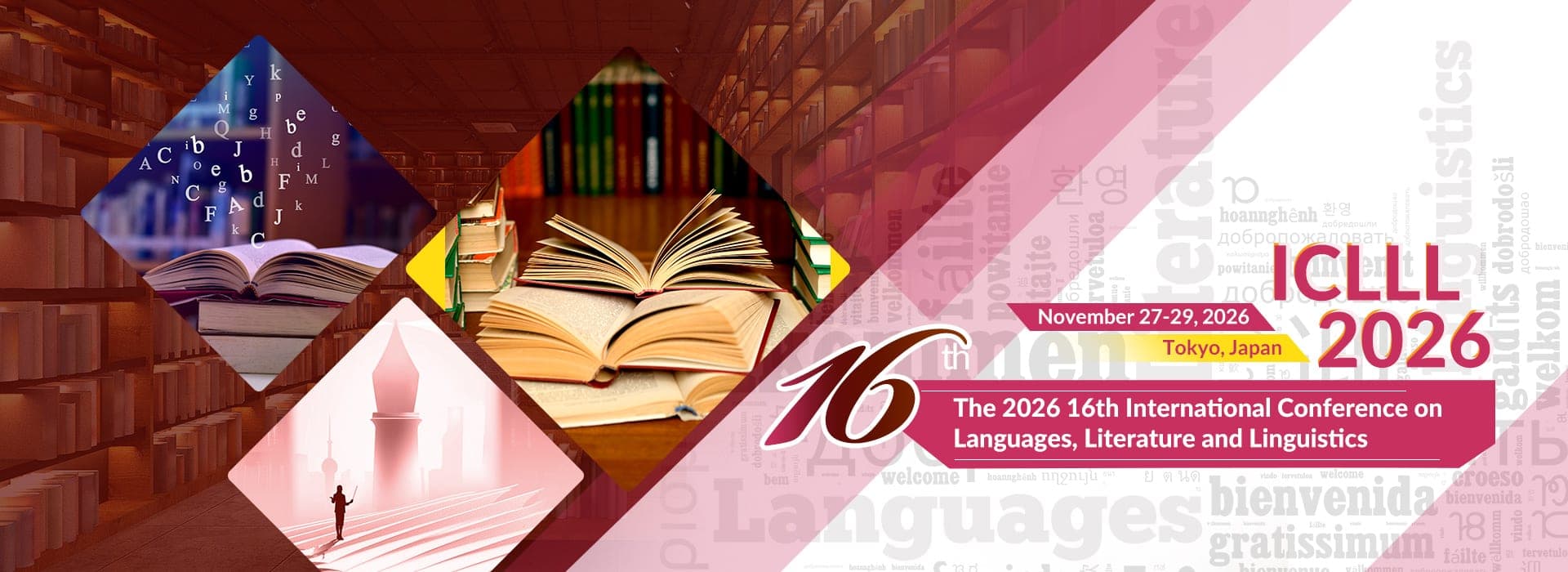
16th International Conference on Languages, Literature, and Linguistics (ICLLL 2026)
Recurring
Part of the PARIS 5th World Congress on Languages, Literature & Social Sciences: PL2S2-27 series →
Call for papers/Topics Full Articles/ Reviews/ Shorts Papers/ Abstracts are welcomed in the following research fields: I. Core Independent Disciplines & Key Areas 1. Linguistics & Language Studies - Phonetics and Phonology: The physical production, acoustics, and cognitive patterns of human speech sounds. - Syntax and Morphology: The structural rules governing sentence formation and internal word construction. - Semantics and Pragmatics: The literal meaning of words and how context alters interpretation in real-world communication. - Applied Linguistics: Second-language acquisition, language pedagogy, translation studies, and speech pathology. - Sociolinguistics: The study of how language varies across social classes, regions, genders, and cultures. - Computational Linguistics: Natural language processing, machine translation, speech recognition, and corpus linguistics. 2. Literature & Literary Studies - Literary Theory and Criticism: Philosophical frameworks for analyzing texts, including structuralism, post-colonialism, feminist criticism, and psychoanalysis. - Comparative Literature: Analyzing literary works across different national traditions, languages, eras, and mediums. - Genre Studies: Examination of specific literary forms such as poetry, drama, prose fiction, creative non-fiction, and speculative literature. - Historical and Regional Literatures: Classical antiquity, Medieval, Renaissance, Post-modern, African, Asian, Indigenous, and Diaspora literatures. - Philology and Textual Studies: The historical study of language through manuscript preservation, critical editions, and textual archaeology. 3. Psychology & Human Behavior - Cognitive Psychology: Memory, perception, attention, reasoning, decision-making, and problem-solving processes. - Developmental Psychology: Physical, cognitive, and emotional development across the human lifespan. - Social and Personality Psychology: Individual differences, group dynamics, social perception, attitudes, and interpersonal relationships. - Clinical and Counseling Psychology: Mental health diagnosis, psychological disorders, therapeutic modalities, and well-being. 4. Sociology & Social Structures - Sociological Theory: Micro- and macro-level frameworks analyzing social order, power, stratification, and social change. - Institutions and Demographics: Family structures, education systems, religion, crime and deviance, urban sociology, and population dynamics. - Social Inequality: Systems of class, race, ethnicity, gender, and global stratification. 5. Anthropology & Cultural Studies - Cultural and Social Anthropology: Ethnographic studies of human cultures, beliefs, rituals, kinship, and customs. - Biological Anthropology: Human evolution, primatology, genetic variation, and physical adaptations. - Archaeology: Reconstructing past human societies through material remains and artifact analysis. - Linguistic Anthropology: How language shapes social life, identity, and cultural ideology. 6. History & Historical Analysis - Historiography: The methods, theories, and historical development of history writing itself. - Chronological Eras: Ancient, Medieval, Early Modern, and Contemporary global histories. - Thematic History: Social, economic, political, cultural, military, and environmental history. 7. Political Science & Global Affairs - Political Theory and Philosophy: Conceptions of justice, authority, freedom, power, and statehood from antiquity to modernity. - Comparative Politics: Analysis of domestic political structures, electoral systems, and governance across nations. - International Relations: Global diplomacy, conflict resolution, international law, and foreign policy analysis. - Public Policy and Administration: The implementation of government policy, institutional design, and bureaucratic function. 8. Philosophy & Human Thought - Epistemology and Metaphysics: The nature of knowledge, belief, truth, reality, and existence. - Ethics and Value Theory: Moral philosophy, bioethics, environmental ethics, and political philosophy. - Logic and Philosophy of Mind: Formal reasoning, consciousness, intentionality, and cognitive metaphysics. II. Interrelated and Cross-Disciplinary Fields 1. Language, Culture, and Society - Discourse Analysis: Examining spoken and written language to uncover power dynamics, ideology, and social norms. - Psycholinguistics: The intersection of linguistics and cognitive psychology, focusing on how the brain processes, comprehends, and produces language. - Ethnolinguistics: The relationship between language structure and the worldview of specific cultural groups. - Digital Humanities: Applying computational tools, data visualization, and algorithms to literary, historical, and linguistic datasets. 2. Literature, Philosophy, and History - Intellectual History: The study of how ideas, philosophies, and ideologies emerge and evolve through historical texts. - Hermeneutics: The theory and methodology of text interpretation, spanning theology, literature, law, and philosophy. - Narratology and Cultural Memory: How societies use narrative forms, folklore, and historical literature to construct collective identity and history. 3. Social Sciences, Communication, and Politics - Political Communication: How rhetoric, media, language, and propaganda shape public opinion, policy, and elections. - Sociology of Knowledge: Investigating how social processes influence the creation, dissemination, and institutionalization of ideas. - Behavioral Economics: Integrating cognitive psychology with economic decision-making models. - Media and Cultural Studies: Analyzing how popular culture, journalism, digital platforms, and mass media reflect and shape social values. 4. Philosophy, Language, and Mind - Philosophy of Language: Exploring the relationships between language, thought, reality, and reference. - Cognitive Poetics: Using insights from cognitive science to understand how readers experience and interpret literary works. - Semiotics: The broad study of signs, symbols, and meaning-making processes across language, culture, and social signals
Closing dates are Anywhere on Earth (AoE) unless the organizer stated otherwise.
Paris, France
Open ibis Styles Paris Villejuif in maps ↗No street address is on file for this listing — what the organizer gave is above. Suggest the venue address →
Arts & Humanities · Literature
Recurring
Arts & Humanities · Literature
A match in this field was an edition that has ended. The series is suggested in its place, so the recommendation still leads somewhere useful.