Education · Teaching & Learning
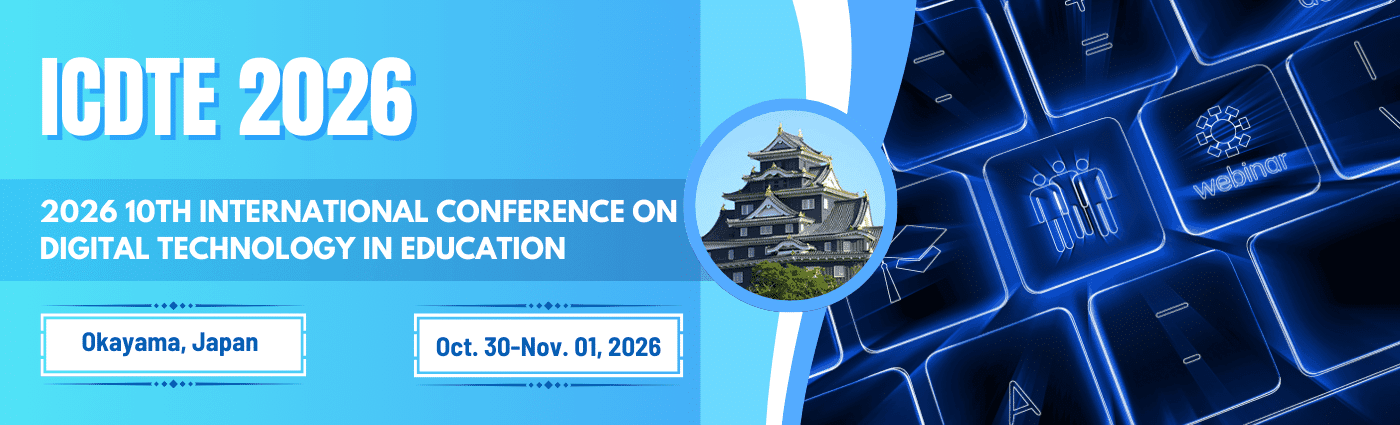
10th International Conference on Digital Technology in Education (ICDTE 2026)
Recurring
Call for papers/Topics Topics of Interest for Submission include, but are Not Limited to: I. General Overarching Themes - Technological Determinism vs. Social Shaping of Technology: How much does technology dictate our future versus how much do we shape it? - Ethical Implications of Emerging Technologies: Addressing concerns like bias, privacy, surveillance, and accountability in AI, big data, and other advanced tech. - The Future of Humanity in a Technologically Advanced World: Exploring long-term societal shifts, human-computer interaction, and the definition of what it means to be human. - Innovation and Disruption: How technology fuels innovation and disrupts existing industries, social structures, and cultural norms. - Sustainability and Technology: The role of technology in addressing environmental challenges and promoting sustainable practices, as well as its own environmental footprint. - Global Perspectives on Technology's Impact: Examining how different cultures and regions experience and adapt to technological advancements. II. Impact on Society - Artificial Intelligence (AI) and its Societal Implications: - AI in the workplace: automation, job displacement, new skill requirements, the future of work. - AI in daily life: smart homes, personalized experiences, algorithmic decision-making. - Ethical AI: bias, fairness, transparency, accountability, and explainable AI. - AI and governance: regulation, policy, and international cooperation. - AI and creativity: generative AI, intellectual property, and the nature of original work. - The Digital Divide and Digital Inclusion: - Unequal access to technology and its impact on socio-economic disparities. - Strategies for bridging the digital divide (infrastructure, affordability, digital literacy). - The role of public-private partnerships in ensuring equitable access. - Privacy and Data Security in the Digital Age: - Data collection, storage, and usage. - Cybersecurity threats and mitigation strategies. - User control over personal data and privacy regulations (e.g., GDPR). - Surveillance technologies and their impact on civil liberties. - Social Connectivity and Interaction: - The impact of social media on relationships, community, and mental well-being. - Online communities and virtual social spaces. - The spread of misinformation and disinformation. - Digital citizenship and responsible online behavior. - Democracy, Governance, and Civic Engagement: - The role of technology in political discourse, elections, and activism. - E-governance and digital public services. - Challenges to democratic processes from technology (e.g., foreign interference). - Health and Well-being in the Digital Age: - Telemedicine and digital health solutions. - Mental health impacts of screen time and social media. - Wearable technology and data-driven health. - Ethical considerations in health tech (e.g., genetic technologies). III. Impact on Culture - Digital Culture and Identity: - The formation of online identities and subcultures. - Cultural homogenization vs. diversification through digital platforms. - The influence of algorithms on cultural consumption and trends. - Media and Communication Transformation: - The evolution of news consumption and media landscapes. - The rise of citizen journalism and user-generated content. - The impact of streaming services on traditional media. - The future of storytelling in digital formats. - Art, Creativity, and Expression: - Digital art, music, and performance. - The intersection of traditional and digital artistic practices. - Copyright and ownership in the age of AI-generated content. - Virtual and augmented reality in creative industries. - Cultural Heritage and Preservation: - Digitization of cultural artifacts and archives. - The role of technology in preserving endangered languages and traditions. - Accessibility of cultural heritage through digital platforms. - Globalization and Intercultural Exchange: - How technology facilitates cross-cultural communication and understanding. - The challenges of cultural misunderstandings in online spaces. - The role of translation technologies in bridging cultural gaps. IV. Impact on Education - Pedagogical Innovations and Learning Models: - Online learning, blended learning, and flipped classrooms. - Personalized learning paths and adaptive technologies. - Gamification and educational games. - Project-based learning and authentic assessments in a digital context. - Educational Technology (EdTech) Tools and Platforms: - Learning Management Systems (LMS). - Virtual and augmented reality in the classroom. - AI in education: intelligent tutoring systems, automated assessment. - Robotics in education and STEM learning. - Accessibility and Inclusivity in Education: - Using technology to support students with diverse learning needs. - Addressing the digital divide in educational access. - Promoting digital literacy and critical thinking skills for all learners. - Teacher Training and Professional Development: - Equipping educators with the skills to integrate technology effectively. - Professional learning communities in the digital age. - Addressing concerns about teacher workload and digital fatigue. - Curriculum Development and Content Creation: - Designing curricula for the digital age. - Open Educational Resources (OER) and open access to knowledge. - The role of digital media in content delivery. - Assessment and Evaluation: - Online assessment methods and their validity. - Formative and summative assessment in digital learning environments. - Learning analytics and data-driven insights into student performance. - The Future of Schools and Universities: - Rethinking physical learning spaces in a digital world. - The role of lifelong learning and upskilling in a rapidly changing job market. - Global collaboration in education.
11 avenue Louis Aragon, 94800, Villejuif - France
Paris, France
Open ibis Styles Paris Villejuif in maps ↗The address is as the organizer gave it, and it is not checked against a map.
Education · Teaching & Learning
Recurring
Education · Teaching & Learning
Recurring
Education · Teaching & Learning
Education · Teaching & Learning