Education · Teaching & Learning
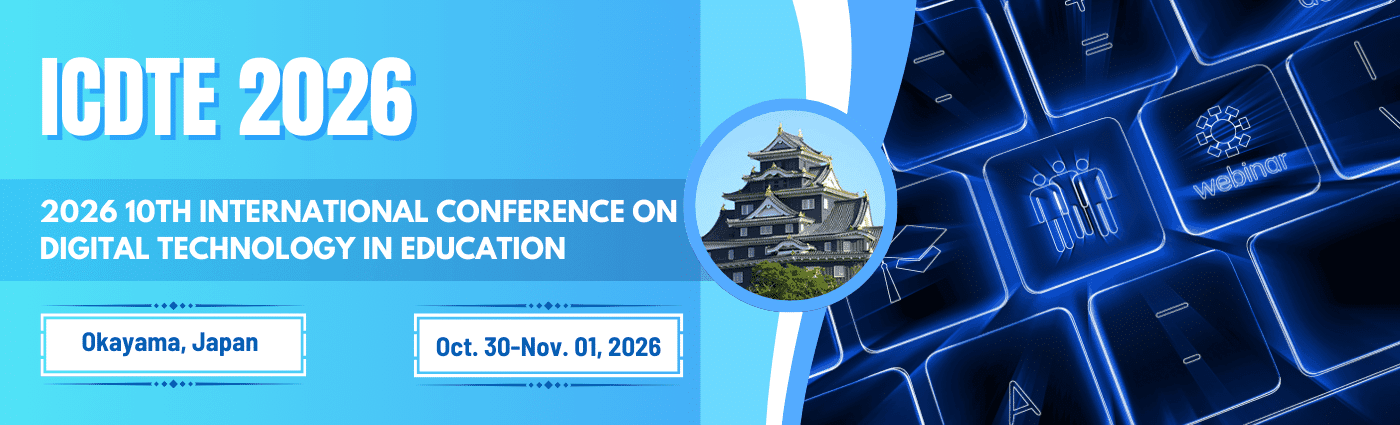
10th International Conference on Digital Technology in Education (ICDTE 2026)
Recurring
Call for papers/Topics All Abstracts, Reviews, short articles, Full articles, Posters are welcomed related with any of the following research fields: Foundational & Independent Topics These topics represent the core, standalone principles unique to each specific discipline before they are combined. 1. Educational Theory and Learning Sciences The theoretical study of how humans acquire, process, and retain knowledge. - Cognitive and Behavioral Theories: Constructivism, cognitivism, behaviorism, and connectivism. - Cognitive Load Theory: Working memory limits, schema acquisition, and extraneous vs. germane cognitive load. - Curriculum Design Frameworks: Understanding by Design (UbD / backward design), Bloom's Taxonomy, and Webb’s Depth of Knowledge (DoK). - Social-Emotional Learning (SEL): Self-regulation, emotional intelligence, and interpersonal skills in developmental psychology. - Human Development: Stages of physical, social, and cognitive development from early childhood through adulthood. 2. Pedagogy and Instructional Practices The art, science, and practical application of teaching methodologies in the classroom. - Classroom Management: Establishing behavioral expectations, routine building, and environment design. - Differentiated Instruction: Modifying content, process, and products to accommodate varying student readiness levels. - Assessment Methodologies: Diagnostic, formative, summative, and authentic performance-based assessments. - Culturally Responsive Pedagogy: Integrating diverse cultural perspectives into teaching practices to foster equity. - Direct vs. Inquiry-Based Instruction: Balancing teacher-led lectures with student-led discovery and problem-based learning. 3. Core Information & Digital Technologies The pure engineering, infrastructure, and software principles that support digital ecosystems. - Cloud Computing & Infrastructure: Software-as-a-Service (SaaS), cloud hosting, and local network optimization. - Systems Interoperability & Data Flow: Database management, API integrations, and standardized communication protocols. - Human-Computer Interaction (HCI): UI/UX design, accessibility standards (such as WCAG), and responsive interface design. - Artificial Intelligence Architectures: Deep learning, natural language processing (NLP), computer vision, and machine learning algorithms. Interrelated & Integrated Topics These fields represent the powerful intersections where education, teaching, and technology converge to modernize learning environments. 1. EdTech Integration and Digital Pedagogy The direct application of digital tools to enhance instructional delivery and learning. - Integration Frameworks: The SAMR model (Substitution, Augmentation, Modification, Redefinition) and the TPACK framework (Technological Pedagogical Content Knowledge). - Gamification and Immersive Learning: Applying game mechanics (leaderboards, badges, quests) and Virtual/Augmented Reality (VR/AR) to active learning. - Flexible Learning Models: Blended learning, flipped classrooms, fully online (asynchronous) courses, and hybrid physical-digital classrooms. - Digital Accessibility & Assistive Tech: screen readers, speech-to-text, and adaptive hardware designed to uphold Universal Design for Learning (UDL) guidelines. 2. AI-Enabled Classrooms and Intelligent Tutoring The intersection of advanced computer science and personalized cognitive coaching. - Dialogue-Based AI Tutors: Transitioning from rigid, script-based digital learning to adaptive, conversational pedagogical agents that nudge, question, and scaffold. - AI Teacher Co-Pilots: Automated tools for drafting highly customized lesson plans, generating rubrics, and reducing administrative teacher burnout. - Metacognitive Friction & Offloading Policies: Designing AI tools that prompt active thinking and prevent "metacognitive laziness" (where students offload raw cognitive tasks directly to AI with no real learning gains). - Learning Analytics and Predictive Interventions: Using real-time data streams to flag knowledge gaps, predict student performance drops, and trigger timely human interventions. 3. Unified Academic Ecosystems and Digital Governance How technology, school policy, and systems infrastructure merge to manage institutions securely and fluidly. - Ecosystem Interoperability: Integrating the Learning Management System (LMS) seamlessly with Student Information Systems (SIS), parent portals, and grading pipelines. - Digital Credentials and the Skills Economy: Blockchain-secured digital badges, microcredentials, and skill-alignment platforms that bridge K-12/higher education with real-world employer needs. - Data Privacy, Safety, and Ethics: Navigating legal frameworks (COPPA, GDPR, FERPA) and deploying strict trust rubrics for student data usage in generative AI systems. - Managing Digital Distraction: Designing policies, device-monitoring systems, and environmental limits (like phone boundaries) to balance digital utility with deep cognitive focus
Closing dates are Anywhere on Earth (AoE) unless the organizer stated otherwise.
Rome, Italy
Open University of Washington Rome Center in maps ↗No street address is on file for this listing — what the organizer gave is above. Suggest the venue address →
Education · Teaching & Learning
Recurring
Education · Teaching & Learning
Recurring
Education · Teaching & Learning
Education · Teaching & Learning