Agriculture & Veterinary · Agriculture
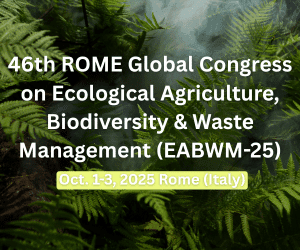
46th ROME Global Congress on Ecological Agriculture, Biodiversity & Waste Management (EABWM-25)
Dates1–3 Oct 2025
LocationRome, Italy
SubmissionsNot listed
RegistrationClosed
FormatIn person
FieldAgriculture & Veterinary · Agriculture
OrganizerNot listed
About & call for papers
Call for papers Topics of interest for submission include any topics on Conference Topics: Ecological Agriculture, Biodiversity & Waste Management Here are some potential areas: I. Ecological Agriculture: - Principles and Practices of Ecological Agricultur… Read more
Call for papers Topics of interest for submission include any topics on Conference Topics: Ecological Agriculture, Biodiversity & Waste Management Here are some potential areas: I. Ecological Agriculture: - Principles and Practices of Ecological Agriculture: - Agroecology: Integrating ecological principles into agricultural systems. - Organic Farming: Methods, certification, and market trends. - Biodynamic Agriculture: Holistic and spiritual approach to farming. - Conservation Agriculture: Minimizing soil disturbance, maintaining permanent soil cover, and crop rotation. - No-Till Farming: Benefits for soil health and carbon sequestration. - Integrated Farming Systems: Combining crops, livestock, aquaculture, etc. - Agroforestry: Integrating trees and shrubs into farming landscapes. - Permaculture: Designing sustainable human settlements and agricultural systems. - Urban Agriculture: Ecological food production in urban environments. - Soil Health and Fertility: - Soil biodiversity and its role in nutrient cycling. - Composting and vermicomposting for soil enrichment. - Cover cropping and green manure for soil improvement. - Reduced tillage and its impact on soil structure. - Mycorrhizal fungi and plant nutrient uptake. - Organic soil amendments and fertilizers. - Soil erosion control and management. - Ecological Pest and Disease Management: - Integrated Pest Management (IPM) strategies. - Biological control of pests and diseases. - Use of beneficial insects and microorganisms. - Resistant crop varieties and their role. - Natural pesticides and biopesticides. - Weed management without synthetic herbicides. - The role of biodiversity in pest and disease regulation. - Water Management in Ecological Agriculture: - Water conservation techniques (e.g., rainwater harvesting, drip irrigation). - Water quality protection in agricultural landscapes. - Efficient irrigation practices for organic systems. - The role of soil health in water retention. - Wastewater treatment and reuse in agriculture (safely managed). - Livestock and Ecological Agriculture: - Pasture-based livestock systems and their benefits. - Animal welfare in ecological farming. - Rotational grazing and its impact on land health. - Manure management for soil fertility and reduced emissions. - Integration of livestock and crop production for nutrient cycling. - Breeds adapted to ecological farming systems. - Climate Change and Ecological Agriculture: - Ecological farming practices for climate change mitigation (e.g., carbon sequestration). - Adaptation strategies to the impacts of climate change (e.g., drought-resistant crops). - The role of biodiversity in building resilient agricultural systems. - Reducing greenhouse gas emissions from agriculture. - Carbon farming and payment for ecosystem services. II. Biodiversity: - The Importance of Biodiversity in Agriculture: - Ecosystem services provided by biodiversity (pollination, pest control, nutrient cycling, water purification). - The role of genetic diversity in crop and livestock resilience. - Wild relatives of crops and their potential for breeding. - The importance of pollinators and their conservation. - Soil biodiversity and its contribution to soil health. - Agrobiodiversity for food security and nutrition. - Biodiversity Conservation in Agricultural Landscapes: - Creating and managing habitats for wildlife on farms (e.g., hedgerows, buffer strips, wildflower meadows). - Agroforestry systems and their role in biodiversity conservation. - Conservation tillage and its impact on soil organisms. - The role of organic farming in promoting biodiversity. - In-situ and ex-situ conservation of agricultural genetic resources. - Connecting agricultural landscapes for wildlife movement. - Impacts of Conventional Agriculture on Biodiversity: - Habitat loss and fragmentation due to agricultural expansion. - The effects of pesticides and herbicides on non-target organisms. - Monoculture and its impact on species diversity. - The role of genetically modified organisms (GMOs) on biodiversity (various perspectives). - Water pollution from agricultural runoff and its effects on aquatic biodiversity. - Valuing Biodiversity in Agriculture: - Economic valuation of ecosystem services provided by biodiversity. - Payment for ecosystem services (PES) schemes in agriculture. - The role of biodiversity in sustainable food systems. - Market opportunities for biodiversity-friendly agricultural products. - Policy and Governance for Agrobiodiversity Conservation: - National and international policies related to agrobiodiversity. - The role of seed banks and genetic resource conservation programs. - Farmers' rights and access to genetic resources. - Integrating biodiversity conservation into agricultural extension services. - Public awareness and education on the importance of agrobiodiversity. III. Waste Management: - Sources and Types of Agricultural Waste: - Crop residues (straw, stalks, leaves, etc.). - Animal manure and bedding. - Food processing by-products. - Agrochemical containers and packaging. - Plastic films and other agricultural plastics. - Wastewater from agricultural activities. - Slaughterhouse waste. - Sustainable Agricultural Waste Management Practices: - Waste reduction and prevention strategies on farms. - Composting and vermicomposting of organic waste. - Anaerobic digestion for biogas production and digestate fertilizer. - Biochar production from agricultural biomass. - Using crop residues for animal feed or bedding. - Mulching with organic agricultural waste. - Recycling of agricultural plastics and other materials. - Innovative uses for agricultural waste (e.g., bio-based materials). - Environmental Impacts of Improper Agricultural Waste Management: - Water pollution from manure runoff and agrochemicals. - Air pollution from burning agricultural waste. - Greenhouse gas emissions from manure storage and decomposition. - Soil contamination from improper disposal of hazardous waste. - Impacts on biodiversity from waste contamination. - Policies and Regulations for Agricultural Waste Management: - National and regional regulations on agricultural waste disposal. - Best management practices for minimizing environmental impact. - Incentives and support for sustainable waste management technologies. - The role of circular economy principles in agricultural waste management. - Technological Innovations in Agricultural Waste Management: - Advanced composting and anaerobic digestion technologies. - Biomass gasification and pyrolysis for energy and bio-product recovery. - Sensors and monitoring systems for waste management processes. - Mobile processing units for on-farm waste treatment. - Development of biodegradable agricultural plastics. - Using artificial intelligence for optimizing waste management. IV. Interconnections and Synergies: - The role of biodiversity in enhancing ecological agriculture. - How ecological agriculture minimizes waste generation. - Using agricultural waste to improve soil health and biodiversity. - Policy frameworks that integrate ecological agriculture, biodiversity conservation, and waste management. - Case studies of successful integrated systems. - The economic benefits of adopting holistic approaches. - The social and ethical dimensions of sustainable agriculture.
Venue
University of Washington Rome Center
University of Washington Rome Center
Rome, Italy
Open University of Washington Rome Center in maps ↗The address is as the organizer gave it, and it is not checked against a map.
Similar conferences
Agriculture & Veterinary · Agriculture
3rd International Conference on Green Energy and Resource Efficiency

Agriculture & Veterinary · Agriculture
DUBAI 3rd International Conference on Agricultural Technology & Food Security (ATFS-27) scheduled on Oct. 4-6, 2027 Dubai (UAE)
Instead of a past edition
View the seriesInternational Conference on Asia Agriculture and Animal (ICAAA) — 3 editions, most recently 2026
A match in this field was an edition that has ended. The series is suggested in its place, so the recommendation still leads somewhere useful.
Frequently asked
When is the 46th ROME Global Congress on Ecological Agriculture, Biodiversity & Waste Management (EABWM-25) submission date?
This edition has ended. The series page shows whether a newer edition is accepting submissions.
Where was 46th ROME Global Congress on Ecological Agriculture, Biodiversity & Waste Management (EABWM-25) held?
It was held at the University of Washington Rome Center, Rome, Italy.
Can I attend 46th ROME Global Congress on Ecological Agriculture, Biodiversity & Waste Management (EABWM-25) remotely?
No — this edition is listed as in person only.