Engineering & Technology · Bioengineering & Biomedical Engineering
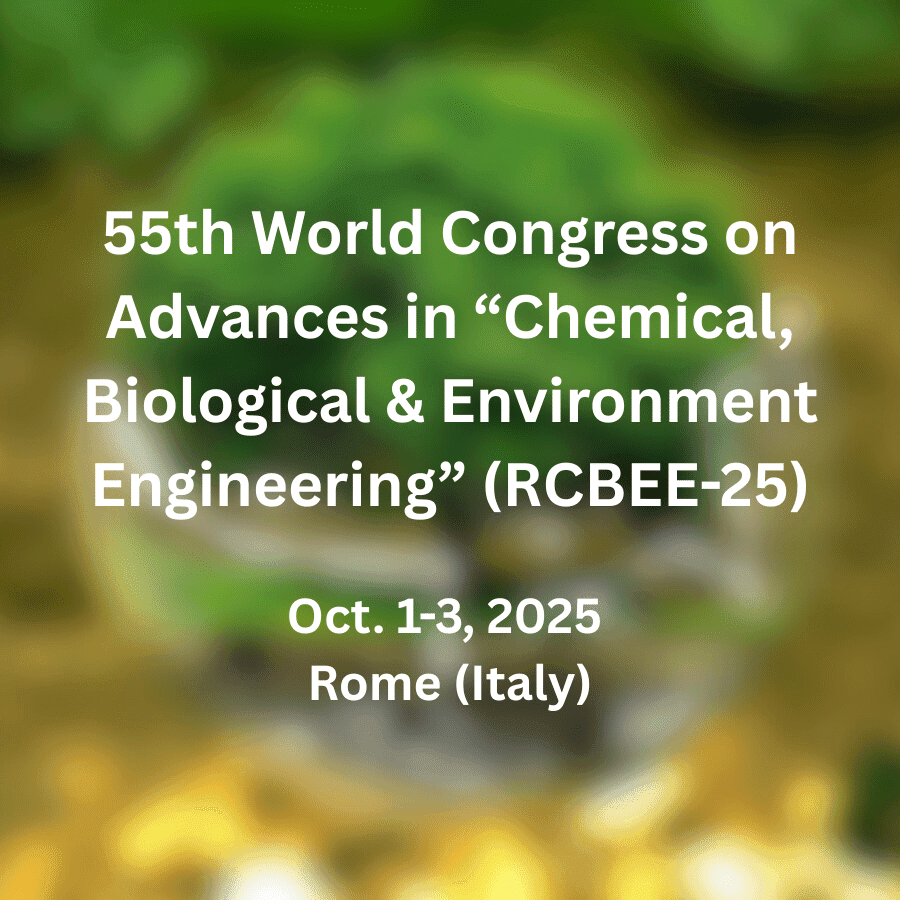
55th ROME World Congress on Advances in “Chemical, Biological & Environment Engineering” (RCBEE-25)
Dates1–3 Oct 2025
LocationRome, Italy
SubmissionsNot listed
RegistrationClosed
FormatHybrid
FieldEngineering & Technology · Bioengineering & Biomedical Engineering
OrganizerNot listed
About & call for papers
Call for papers/Topics The conference topics of interest include the following: Overarching Themes Connecting the Disciplines: - Sustainability: This is a major unifying theme, encompassing sustainable development, green chemistry, renewable energy, waste r… Read more
Call for papers/Topics The conference topics of interest include the following: Overarching Themes Connecting the Disciplines: - Sustainability: This is a major unifying theme, encompassing sustainable development, green chemistry, renewable energy, waste reduction, and the circular economy. - Biotechnology: Applications of biological systems and organisms in chemical and environmental processes, including bioremediation, biofuels, and bioprocessing. - Environmental Impact: Assessing and mitigating the environmental consequences of chemical and biological processes, including pollution control, waste management, and climate change. - Resource Management: Sustainable use and management of natural resources like water, air, and soil. - Modeling and Simulation: Using computational tools to understand, optimize, and predict the behavior of chemical, biological, and environmental systems. - Interdisciplinary Approaches: Combining knowledge and techniques from all three engineering fields to address complex challenges. Specific Topics within Chemical Engineering: - Catalysis: Fundamental and applied catalysis, including heterogeneous, homogeneous, bio-, and electrocatalysis. This also includes photocatalysis and catalytic materials like zeolites. - Reaction Engineering: Design and analysis of chemical reactors, chemical kinetics, and thermodynamics. - Separation Processes: Distillation, extraction, membrane separation, adsorption, and other techniques for separating mixtures. - Process Design and Optimization: Developing efficient and sustainable chemical processes, including process integration and intensification. - Materials Science and Engineering: Synthesis, characterization, and application of novel materials, including polymers, nanomaterials, and biomaterials. - Chemical Engineering Thermodynamics: Phase equilibria, solution thermodynamics, and thermodynamic modeling. - Fluid Mechanics and Transport Phenomena: Understanding and modeling fluid flow, heat transfer, and mass transfer in chemical processes. - Electrochemical Engineering: Electrochemistry, corrosion, fuel cells, and electrolysis. - Pharmaceutical Engineering: Drug discovery, design, and delivery systems, pharmaceutical process development, and analysis. - Food Engineering: Food processing, preservation, and packaging technologies. - Polymer Engineering: Polymer synthesis, processing, characterization, and applications. - Biochemical Engineering: Bioreactors, bioseparations, metabolic engineering, and enzyme technology. - Safety and Risk Management: Process safety, hazard identification, and risk assessment in chemical plants. - Digitalization in Process Industries: Advanced process automation, AI, machine learning, data management, digital twins, and the Industrial Internet of Things (IIoT). Specific Topics within Biological Engineering (also often referred to as Biomedical Engineering or Bioengineering): - Biomedical Signal Processing: Analysis of biological signals (e.g., EEG, ECG) for diagnosis and monitoring. - Biomedical Imaging: Development and application of imaging techniques (e.g., MRI, CT, ultrasound) for medical diagnosis. - Medical Image Computing: Image analysis, visualization, and interpretation. - Tissue Engineering and Biomaterials: Creating artificial tissues and organs, developing biocompatible materials for implants and drug delivery. - Systems, Computational, and Synthetic Biology: Modeling biological systems, designing new biological parts and systems. - Cardiopulmonary Systems and Physiology-based Engineering: Understanding and engineering the cardiovascular and respiratory systems. - Brain, Neural, and Rehabilitation Engineering: Developing technologies to understand and treat neurological disorders and aid in rehabilitation. - Wearable Biomedical Sensors and Ubiquitous Computing: Creating wearable devices for health monitoring and personalized medicine. - Robotics, Biomechanics, Assistive, and Augmentative Technologies: Developing robots and mechanical devices to assist with medical procedures and improve human function. - Therapeutic and Diagnostic Technologies: Developing new tools and methods for treating and diagnosing diseases. - Biomedical and Health Informatics: Managing and analyzing biological and health data. - Pharmaceutical Science & Clinical Engineering: Applying engineering principles to the development and clinical application of pharmaceuticals. - Genetic Engineering and Genomics: Modifying genes and studying genomes for various applications. - Molecular Bioengineering: Engineering at the molecular level for biological applications. - Biosensors and Bioelectronics: Developing devices that use biological components to detect and measure substances. - Drug Delivery Systems: Designing systems for targeted and controlled release of drugs. - Design of Artificial Organs: Creating functional replacements for damaged organs. - 3D Bioprinting for Tissue Repair: Using 3D printing to create biological tissues for repair and regeneration. - Nanotechnology in Biomedicine: Applying nanoscale materials and devices to medical applications. - Biodegradable Materials: Developing materials that can degrade safely in the body or environment. - Sustainable Medical Devices: Designing medical devices with environmental considerations. - Immunoengineering and Immunotherapy: Engineering the immune system to fight diseases. - Stem Cells for Regenerative Medicine: Using stem cells to repair and regenerate tissues. - Neural Engineering and Neurotechnology: Developing technologies to interact with and modulate the nervous system. - Biomechanics and Rehabilitation Engineering: Studying the mechanics of biological systems and developing devices for rehabilitation. Specific Topics within Environmental Engineering: - Water and Wastewater Treatment: Developing technologies for purifying water and treating sewage. - Air Pollution Control: Preventing and reducing emissions of air pollutants. - Solid Waste Management: Collection, treatment, and disposal of solid waste, including recycling and waste-to-energy technologies. - Hazardous Waste Management: Safe handling, treatment, and disposal of hazardous substances. - Soil Remediation: Cleaning up contaminated soil and groundwater. - Climate Change Mitigation and Adaptation: Developing strategies to reduce greenhouse gas emissions and adapt to the impacts of climate change. - Renewable and Non-Renewable Energies: Environmental aspects of energy production and utilization. - Environmental Monitoring and Assessment: Developing methods for monitoring environmental quality and assessing environmental impacts. - Ecology and Ecosystem Management: Understanding and protecting natural ecosystems. - Sustainable Development: Integrating environmental considerations into economic and social development. - Environmental Policy and Regulation: Development and implementation of environmental laws and regulations. - Groundwater Issues: Management and protection of groundwater resources. - Pollution and Health Issues: Investigating the health effects of environmental pollution. - Greenhouse Effect and Global Warming: Understanding the causes and consequences of climate change. - Natural Resources Sustainability: Ensuring the sustainable use of natural resources. - River Conservation: Protecting and restoring river ecosystems. - Big Data and Data Analytics Applied to Sustainability: Using data to inform environmental decision-making. - Sustainable Building Technologies: Designing and constructing environmentally friendly buildings. - Sustainability in Water Management: Developing sustainable water resource management strategies. - Sustainable Manufacturing and Maintenance Processes: Reducing the environmental footprint of industrial processes. - Sustainable Technologies for Risk Mitigation: Developing technologies to prevent and mitigate environmental risks. - Sustainable Transport: Developing environmentally friendly transportation systems. - Environmental Geotechnology: Applying geotechnical engineering principles to environmental problems. - Recycled Waste Materials in Engineering: Utilizing waste materials in construction and other engineering applications. - Nature-Based Solutions: Using natural processes to address environmental challenges.
Venue
University of Washington Rome Center
Piazza del Biscione 95, 00186 Roma
Rome, Italy
Open University of Washington Rome Center in maps ↗The address is as the organizer gave it, and it is not checked against a map.
Similar conferences
Engineering & Technology · Bioengineering & Biomedical Engineering
World Conference on Orthopaedics and Physiotherapy (WCOP-2026)
Engineering & Technology · Bioengineering & Biomedical Engineering
Global Summit on Biotechnology, Genomics & Bioengineering 2027
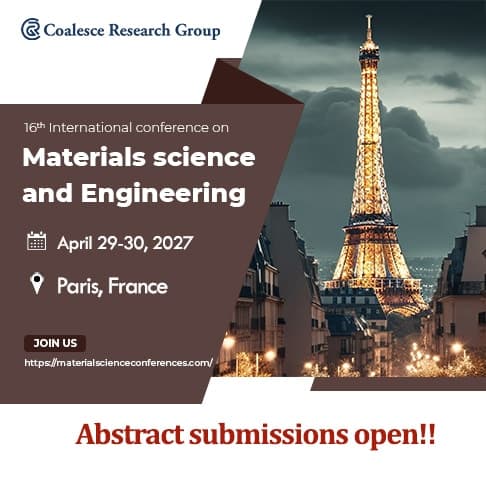
Engineering & Technology · Bioengineering & Biomedical Engineering
16th International Conference on Materials Science & Engineering
Recurring
Frequently asked
When is the 55th ROME World Congress on Advances in “Chemical, Biological & Environment Engineering” (RCBEE-25) submission date?
This edition has ended. The series page shows whether a newer edition is accepting submissions.
Where was 55th ROME World Congress on Advances in “Chemical, Biological & Environment Engineering” (RCBEE-25) held?
It was held at the University of Washington Rome Center, Rome, Italy, with remote attendance offered as well.
Can I attend 55th ROME World Congress on Advances in “Chemical, Biological & Environment Engineering” (RCBEE-25) remotely?
Yes — 55th ROME World Congress on Advances in “Chemical, Biological & Environment Engineering” (RCBEE-25) is hybrid, so remote attendance is offered alongside the venue.