Physical Sciences · Physics
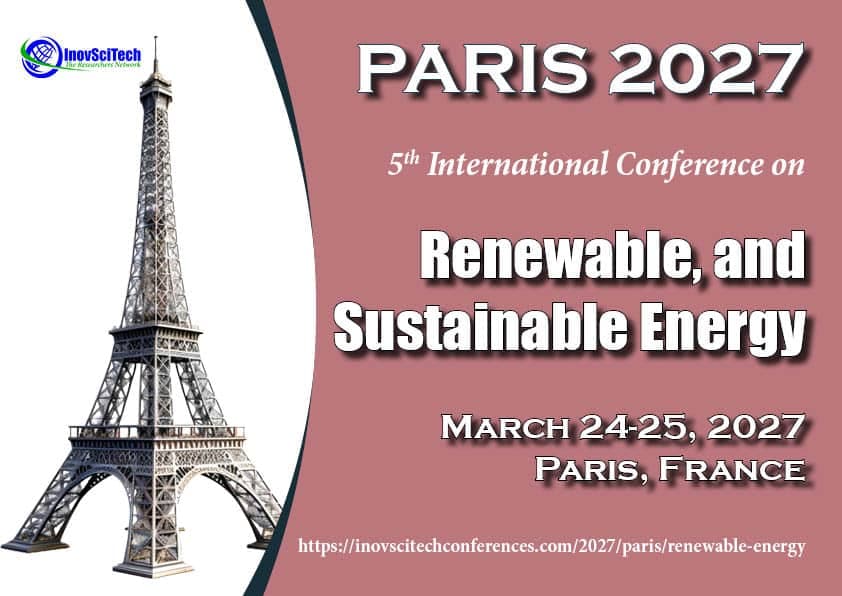
5th International Conference on Renewable and Sustainable Energy
Recurring
Part of the World Congress on “Science, Social Sciences, Humanities & Education” (BS3HE-25) series →
Full Articles/ Reviews/ Shorts Papers/ Abstracts are welcomed in the following research fields: I. Core Science Disciplines & Research Paradigms - Physical Sciences: - Quantum Physics & Technologies (quantum computing, sensing, communication, materials) - Nanotechnology & Nanoscience (nanomaterials, nanoelectronics, nanomedicine) - Advanced Materials Science (smart materials, metamaterials, biomimetic materials, composites) - Optics & Photonics (lasers, fiber optics, optical computing, imaging) - Astronomy & Astrophysics (exoplanets, cosmology, space exploration) - Condensed Matter Physics & Spintronics - Chemical Sciences: - Green Chemistry & Sustainable Chemical Processes - Materials Chemistry & Polymer Science - Analytical Chemistry & Spectroscopy - Electrochemistry & Catalysis - Drug Discovery & Pharmaceutical Chemistry - Biological & Life Sciences: - Genomics, Proteomics & Bioinformatics - Synthetic Biology & Genetic Engineering (CRISPR, gene therapy) - Neuroscience & Brain Science (neuro-engineering, brain-computer interfaces) - Biotechnology & Bioengineering (biomaterials, tissue engineering, bioprinting) - Environmental Biology & Ecology (biodiversity, ecosystem services, conservation) - Microbiology & Immunology - Earth & Environmental Sciences: - Climate Science & Climate Change Modeling - Environmental Monitoring & Remote Sensing - Sustainable Resource Management (water, energy, land) - Geology & Geophysics - Pollution Science & Control - Mathematical & Computational Sciences: - Applied Mathematics & Modeling - Statistics & Probability - Computational Science (high-performance computing, scientific simulation) - Data Science & Big Data Analytics for scientific discovery II. Engineering Innovations & Applications - Artificial Intelligence (AI) & Machine Learning (ML): - Deep Learning & Neural Networks - Generative AI & Large Language Models (LLMs) - AI for scientific discovery and engineering design - Explainable AI (XAI) & Trustworthy AI - AI Ethics & Societal Impact - Robotics & Automation: - Autonomous Systems (drones, self-driving vehicles, mobile robots) - Human-Robot Interaction & Collaboration (Cobots) - Industrial Automation & Smart Factories (Industry 4.0/5.0) - Robotics in healthcare, agriculture, and hazardous environments - Computer Science & Information Technology: - Cybersecurity & Data Privacy (blockchain, quantum-resistant cryptography) - Cloud Computing, Edge Computing & Distributed Systems - Internet of Things (IoT) & Sensor Networks - Software Engineering & Development Methodologies - Human-Computer Interaction (HCI) - Blockchain & Decentralized Technologies (DeFi, Web3) - Sustainable & Environmental Engineering: - Renewable Energy Systems (solar, wind, geothermal, hydropower, hydrogen) - Energy Storage & Conversion Technologies (batteries, fuel cells) - Carbon Capture, Utilization, and Storage (CCUS) - Advanced Water & Wastewater Treatment (resource recovery, desalination) - Green Building & Sustainable Infrastructure - Circular Economy Technologies & Waste-to-Value Solutions - Biomedical & Healthcare Engineering: - Medical Devices & Diagnostics (wearables, smart implants, biosensors) - Biomaterials & Regenerative Medicine - Digital Health & Telemedicine - Drug Delivery Systems & Nanomedicine - Bioinformatics & Computational Biology in healthcare - Civil & Structural Engineering: - Smart Cities & Urban Infrastructure Planning - Resilient Infrastructure & Disaster Mitigation - Sustainable Transportation Systems - Geotechnical Engineering & Materials - Electrical & Electronics Engineering: - Power Systems & Smart Grids - Microelectronics & Nanoelectronics - Communication Systems (5G/6G, satellite communication) - Control Systems & Automation - Mechanical & Mechatronics Engineering: - Advanced Robotics & Mechatronic Systems - Thermodynamics & Heat Transfer - Fluid Dynamics & Aerodynamics - Design & Manufacturing Engineering III. Cross-Cutting Themes & Societal Impact - Digital Transformation: - Industry 4.0/5.0 and beyond - Digital Twins and Cyber-Physical Systems - Augmented Reality (AR), Virtual Reality (VR), and Mixed Reality (MR) for scientific and engineering applications - Ethics, Policy & Governance of Technology: - Responsible Innovation & Technology Assessment - Data Ethics & Privacy Concerns - Regulatory Frameworks for AI, Biotechnology, etc. - Societal Impact of Emerging Technologies - Sustainable Development Goals (SDGs) & Global Challenges: - Science and Technology for Climate Action - Innovation for Affordable and Clean Energy - Technologies for Good Health and Well-being - Sustainable Cities and Communities through S&T - Responsible Consumption and Production - Science Communication & Public Engagement: - Translating complex scientific and technological concepts for broader audiences. - Promoting scientific literacy and critical thinking. - Citizen science initiatives. - Innovation Ecosystems & Entrepreneurship: - Technology transfer and commercialization - Start-ups and venture capital in S&T - Public-private partnerships for innovation IV. Core Disciplines and Interdisciplinary Approaches within Social Sciences & Humanities - Sociology & Anthropology: - Social inequality, stratification, and social justice. - Cultural studies, identity, and diversity. - Urban and rural sociology. - Gender, sexuality, and family studies. - Migration, diaspora, and transnationalism. - Digital sociology and the impact of technology on society. - Applied anthropology and community development. - Ethnography and qualitative research methods. - Political Science & International Relations: - Democracy, governance, and political systems. - Public policy analysis and implementation. - International conflict, peacebuilding, and diplomacy. - Global challenges (e.g., climate change, pandemics) and political responses. - Human rights and social movements. - Political communication and media. - Economics (with a social/humanities lens): - Behavioral economics and decision-making. - Development economics and poverty alleviation. - Social economy and ethical consumption. - Economic history and the evolution of economic thought. - Labor economics and the future of work. - Psychology (Social & Developmental Focus): - Social psychology: group dynamics, attitudes, prejudice, intergroup relations. - Developmental psychology: lifespan development, cognitive and emotional growth. - Environmental psychology: human interaction with natural and built environments. - Cultural psychology: cross-cultural variations in psychological processes. - Psychology of well-being and mental health in diverse contexts. - History & Memory Studies: - Global histories, transnational connections, and comparative history. - Public history, historical memory, and commemoration. - Digital history and archival practices. - Oral history and community narratives. - History of ideas and intellectual movements. - Decolonizing history and challenging dominant narratives. - Philosophy & Ethics: - Applied ethics (e.g., bioethics, environmental ethics, ethics of AI, social justice ethics). - Political philosophy and theories of justice. - Epistemology, metaphysics, and philosophy of mind. - Phenomenology and existentialism in contemporary thought. - Philosophy of language and communication. - Logic and critical reasoning. - Literature & Linguistics: - Comparative literature and world literatures. - Literary theory and criticism. - Language acquisition and multilingualism. - Sociolinguistics and language variation. - Discourse analysis and critical discourse studies. - Digital linguistics and computational literary analysis. - Arts & Cultural Studies (with a social/humanities perspective): - Anthropology of art, music, and performance. - Cultural policy and arts management. - Media studies and popular culture analysis. - Visual culture and representation. - The role of arts in social change and community engagement. V. Education: Theories, Practices & Innovations - Educational Psychology & Learning Sciences: - Cognitive processes in learning. - Motivation, engagement, and self-regulated learning. - Learning theories and their application in diverse contexts. - Neuroscience of learning. - Educational assessment and evaluation. - Curriculum & Pedagogy: - Innovative teaching methods (e.g., inquiry-based, project-based, blended learning). - Curriculum design for 21st-century skills (critical thinking, creativity, collaboration, communication). - Interdisciplinary and transdisciplinary curriculum development. - Experiential learning, service-learning, and civic education. - Arts-based pedagogies and creative education. - Educational Technology & Digital Learning: - AI in education (personalized learning, adaptive systems, intelligent tutoring, ethical considerations). - Online, hybrid, and blended learning models: challenges, opportunities, and best practices. - Learning Management Systems (LMS) and digital learning platforms. - Virtual reality (VR) and augmented reality (AR) for immersive learning experiences. - Gamification and game-based learning in educational settings. - Digital literacies and responsible digital citizenship. - Educational Policy & Leadership: - Education reform and policy analysis. - Leadership in educational institutions (K-12, higher education). - Funding, equity, and access in education. - Global trends and comparative education policy. - Teacher policy, professional development, and well-being. - Higher Education Studies: - The future of universities and higher education institutions. - Student success, retention, and well-being in higher education. - Research ethics and integrity in academia. - Internationalization of higher education. - Employability and graduate outcomes. - Specific Educational Contexts/Challenges: - Early Childhood Education. - Special Education and Inclusive Education. - Adult and Lifelong Learning. - Vocational and Technical Education. - Education in emergencies and conflict zones. - Humanities education in STEM-dominant environments. - Citizenship and Global Education. VI. Intersections & Cross-Cutting Themes - Social Justice, Equity & Inclusion: - Addressing systemic inequalities in society and education. - Anti-racist pedagogies and curriculum. - Gender studies, LGBTQ+ issues, and education. - Disability studies and inclusive practices. - Indigenous knowledge systems and decolonization in education and research. - Ethics of Technology & Society: - The societal impact of AI and automation. - Data privacy, surveillance, and digital ethics. - Responsible innovation and techno-optimism vs. techno-pessimism. - Human-technology co-evolution. - Cultural Heritage & Globalization: - Preservation and interpretation of cultural heritage in a globalized world. - The impact of globalization on local cultures and identities. - Intercultural communication and competence. - Research Methodologies: - Qualitative, quantitative, and mixed methods in social science and humanities research. - Action research and participatory research. - Ethical considerations in research involving human subjects. - Big data methods for social science research. - Sustainability & Environmental Humanism: - The role of social sciences and humanities in addressing climate change and environmental crises. - Environmental education and literacy. - Ecological justice and human-nature relationships. - Arts-Based Research & Practice: - Using artistic and creative methods for inquiry and dissemination in social sciences and education. - Performance as research.
41 Sukhumvit Road Soi 4, Klongtoey, Watthana, 10110, BANGKOK – THAILAND
Bangkok, Thailand
Open ibis Bangkok Sukhumvit 4 in maps ↗The address is as the organizer gave it, and it is not checked against a map.
Physical Sciences · Physics
Recurring
Physical Sciences · Physics
Physical Sciences · Physics
A match in this field was an edition that has ended. The series is suggested in its place, so the recommendation still leads somewhere useful.