Arts & Humanities · Literature
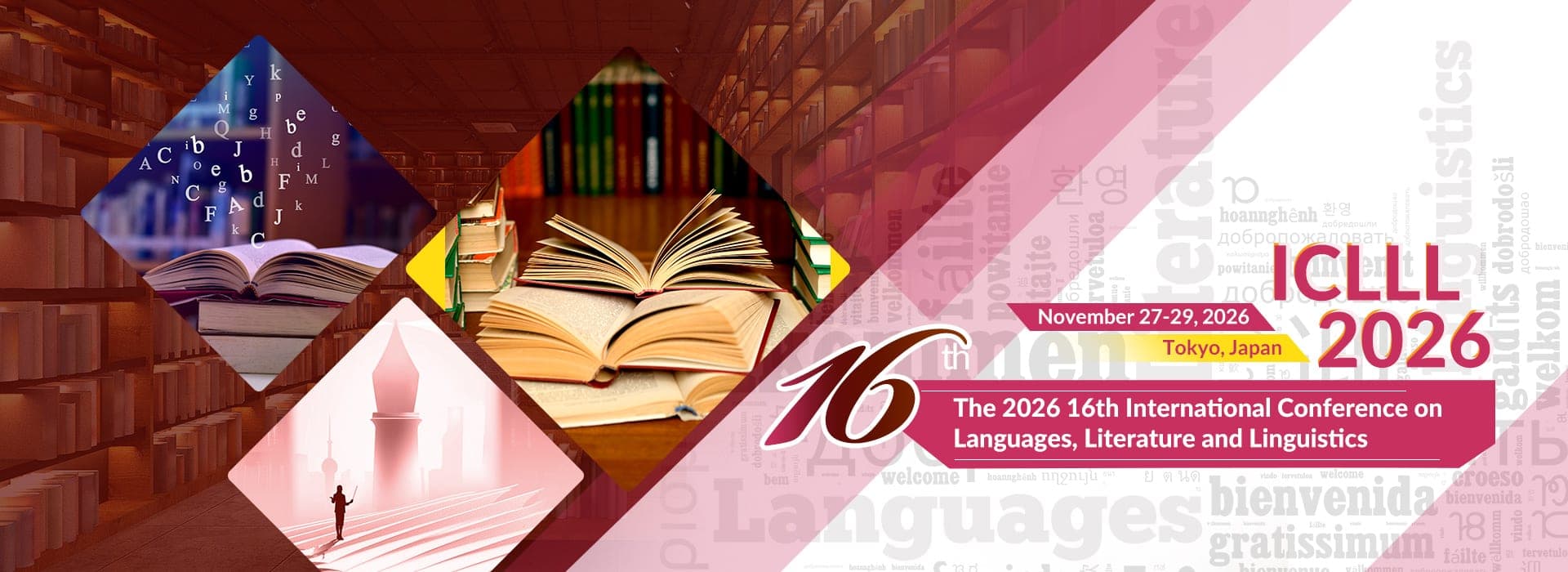
16th International Conference on Languages, Literature, and Linguistics (ICLLL 2026)
Recurring
The idea of 53rd ROME World Congress on Languages, Literature, Humanities & Social Sciences (LLHSS-25) scheduled on Oct. 1-3, 2025 Rome (Italy) is for the researchers, academicians, managers, social scientists, scholars, engineers and parctitioners from all around the world to present and share ongoing research activities. This conference provides opportunities for the delegates to exchange new ideas and application experiences face to face, to establish business or research relations and to find global partners for future collaboration. The conference is being organized by Dignified Researchers Publication (DiRPUB) operating under Pilares D'Elegancia LDA. The conference topics of interest include the following: Languages & Linguistics: - Applied Linguistics: Language teaching methodologies, second language acquisition, bilingualism, multilingualism, translation and interpretation studies, language testing and assessment, corpus linguistics. - Theoretical Linguistics: Phonetics and phonology, morphology, syntax, semantics, pragmatics, discourse analysis. - Historical Linguistics: Language change, etymology, dialectology, sociolinguistics, language documentation and revitalization. - Computational Linguistics: Natural language processing, machine translation, text mining, sentiment analysis. - Psycholinguistics: Language processing, language and the brain, language disorders. - Forensic Linguistics: Language and the law, authorship attribution, voice identification. - Sign Language Studies: Linguistics of sign languages, sign language acquisition, interpretation. - Endangered Languages: Documentation, revitalization efforts, language policy. Literature: - Literary Theory and Criticism: Various critical approaches (e.g., post-structuralism, feminism, postcolonialism, Marxism, ecocriticism). - Comparative Literature: Intersections between different literary traditions, transnational literature, world literature. - Genre Studies: Exploring the conventions and evolution of specific genres (e.g., poetry, drama, fiction, non-fiction). - Author Studies: In-depth analysis of the works of significant writers. - Period Studies: Examining literature within specific historical and cultural contexts (e.g., Renaissance literature, Victorian literature). - Digital Humanities and Literature: Using computational methods for literary analysis, digital archives. - Children's and Young Adult Literature: Exploring themes, representation, and impact. - Creative Writing Studies: Pedagogy, practice, and the role of creativity. - Translation Studies (as it relates to Literature): Challenges and theories of literary translation. - Interdisciplinary Approaches to Literature: Literature and history, literature and philosophy, literature and science. Humanities: - History: Various periods and regions (e.g., ancient history, medieval history, modern history, local history), social history, cultural history, political history, economic history, history of ideas, public history. - Philosophy: Ethics, metaphysics, epistemology, logic, political philosophy, aesthetics, philosophy of mind, history of philosophy. - Religious Studies: World religions, religious history, sociology of religion, philosophy of religion, interfaith dialogue. - Archaeology: Prehistoric archaeology, historical archaeology, underwater archaeology, cultural resource management. - Classics: Ancient Greek and Roman literature, history, philosophy, and art. - Art History: Various periods and movements, art theory, visual culture. - Musicology: Music history, music theory, ethnomusicology, popular music studies. - Performing Arts: Theatre studies, dance studies, performance theory. - Cultural Studies: Popular culture, media studies, identity studies, globalization and culture. - Digital Humanities (broadly): Using digital tools and methods in humanities research. Social Sciences: - Sociology: Social theory, social inequality, social change, globalization, family studies, urban sociology, criminology, sociology of health and illness. - Political Science: Political theory, comparative politics, international relations, public policy, political economy. - Psychology: Cognitive psychology, social psychology, developmental psychology, clinical psychology, neuroscience, organizational psychology. - Anthropology: Cultural anthropology, social anthropology, biological anthropology, linguistic anthropology, archaeology (overlaps with Humanities). - Economics: Microeconomics, macroeconomics, econometrics, development economics, behavioral economics. - Geography: Human geography, physical geography, environmental studies, urban planning, GIS and remote sensing. - Education: Educational theory, curriculum development, pedagogy, educational psychology, sociology of education. - Communication Studies: Media effects, interpersonal communication, organizational communication, intercultural communication. - Social Work: Social welfare policy, social justice, community development, clinical social work. - Gender Studies/Sexuality Studies: Feminist theory, queer theory, gender identity, sexuality and culture. Interdisciplinary Themes: To make it even more engaging, consider themes that bridge these disciplines: - Identity and Representation: How are identities (gender, race, class, etc.) constructed and represented in language, literature, and society? - Power and Inequality: How do power structures manifest in language, literature, and social systems? - Culture and Globalization: The impact of globalization on languages, literatures, and cultural practices. - Technology and Society: The role of technology in shaping communication, culture, and social interactions. - Environment and Sustainability: Interdisciplinary approaches to environmental issues. - Health and Well-being: Social, cultural, and linguistic perspectives on health. - Migration and Diaspora: Experiences and representations of migration. - Memory and History: How are the past and collective memory constructed and contested? - Ethics and Social Justice: Philosophical and social perspectives on ethical issues and justice. - The Digital Humanities: Innovative uses of technology in research and teaching across all these fields.
Piazza del Biscione 95, 00186 Roma
Rome, Italy
Open University of Washington Rome Center in maps ↗The address is as the organizer gave it, and it is not checked against a map.
Arts & Humanities · Literature
Recurring
Arts & Humanities · Literature
Arts & Humanities · Literature
A match in this field was an edition that has ended. The series is suggested in its place, so the recommendation still leads somewhere useful.