How Conference2Go works
Add your event — or claim it
11 required fields for an in-person conference, about two minutes, and the rest is optional. Already listed? Claiming takes two minutes and keeps the listing’s history.
Add an event →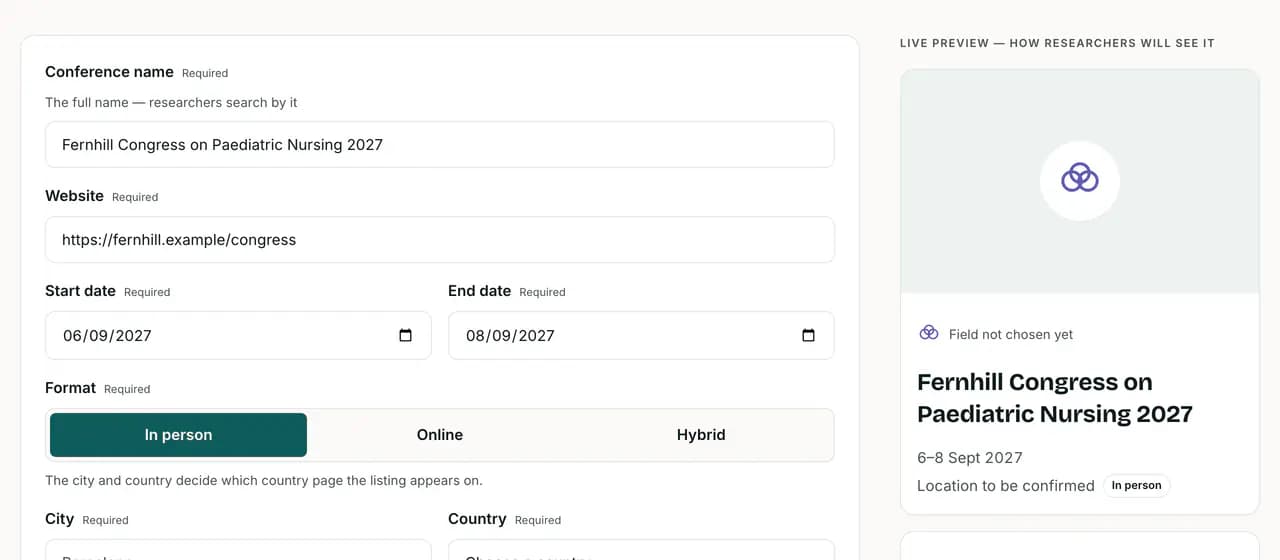
A person reviews it
Every listing is checked by a human — typically live within two working days. That review is why researchers trust what they find here.
What we check →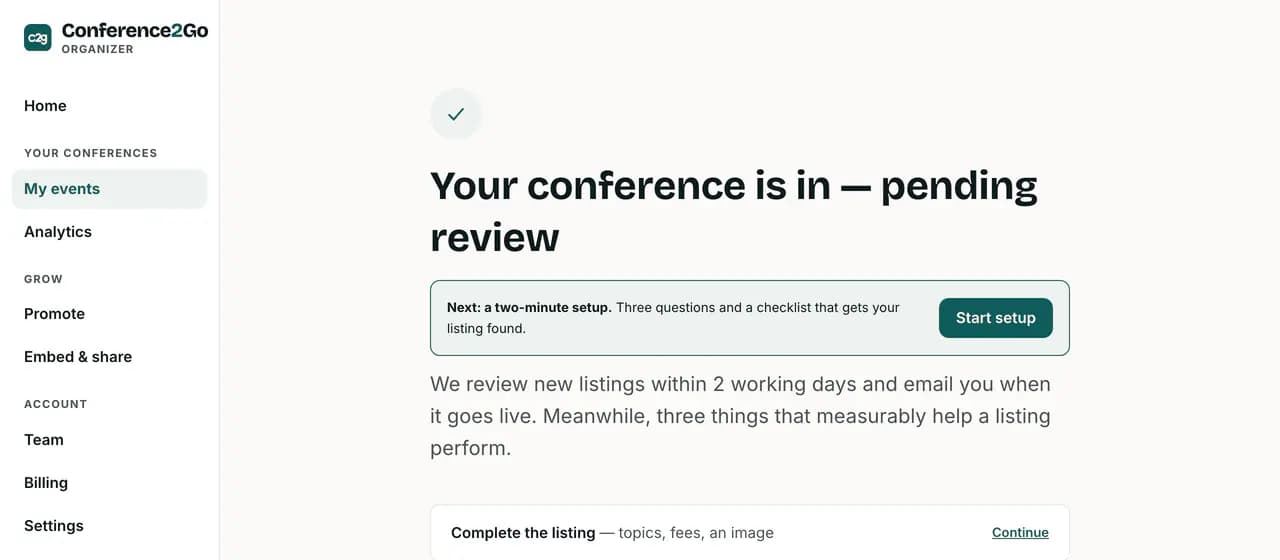
Researchers searching your field find it
Search, field and city pages, open-calls listings, calendar feeds and monthly digests — everywhere it is relevant, automatically.
Where listings appear →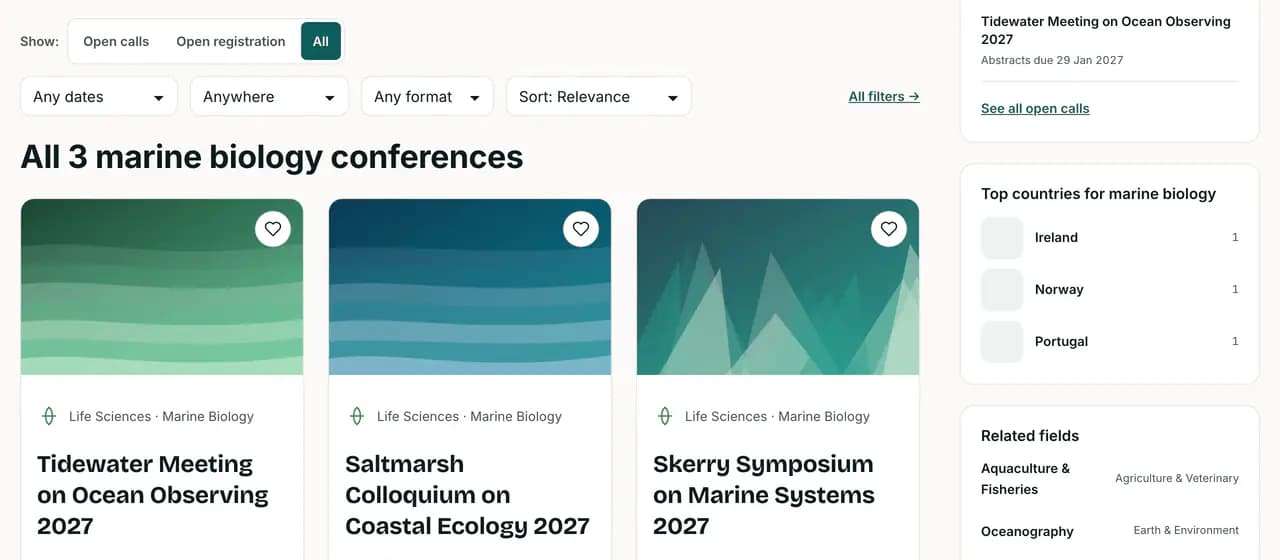
You see who’s interested
Views, saves and outbound clicks — plus which fields and countries your visitors come from. What your own website analytics cannot tell you.
See the dashboard →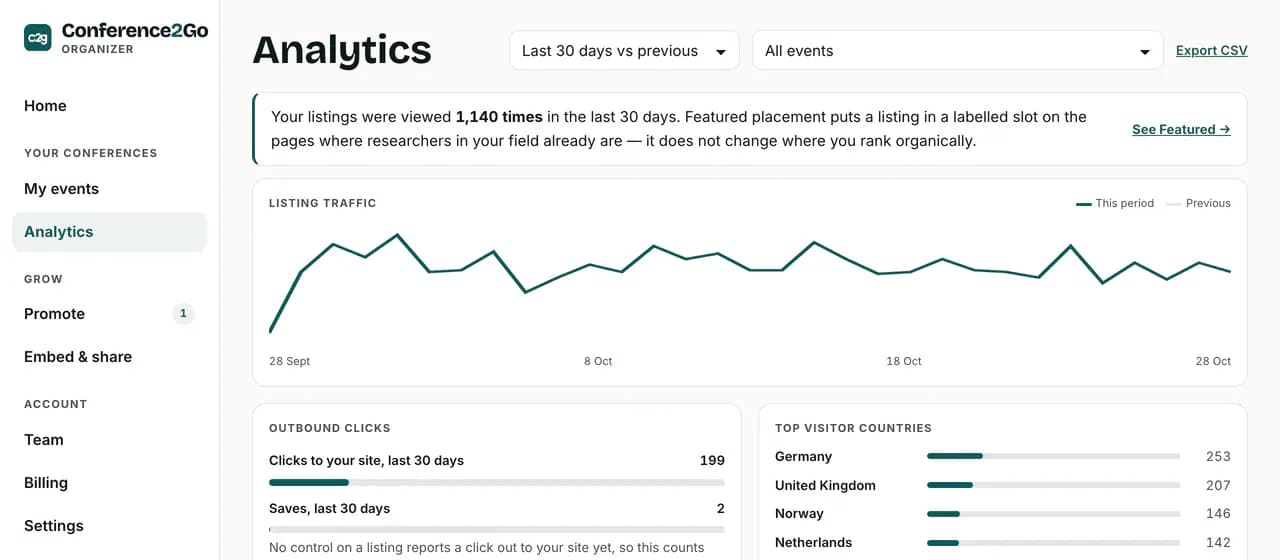
That is the mechanics. The full argument — audience intelligence, free vs promoted, public pricing — lives on the organizer page.
For organizers →What we are — and aren’t
Conference2Go is a discovery directory. We help people find conferences and keep track of the dates.
We don’t handle submissions, we don’t process registrations, and we don’t run the events — those all happen on the organizer’s own website, which every listing links to. If you have a question about a specific conference’s programme, fees or decisions, the organizer is the right address; if a listing here is wrong, tell us and a person fixes it.
What decides the order of results
How well the conference matches what you searched for, more than everything else put together. The other signals break ties within relevance; they never override it. Those others are how complete the listing is, how soon it is and whether its submission date is still open, and how often people who saw it acted on it — as a rate, not a total, so a conference added yesterday is not permanently behind one added two years ago.
A listing with too few views to judge scores neutrally rather than badly. Organizers can buy visibility in labelled placements; they cannot buy position in organic results, because the module that ranks results has no access to campaign or payment data. See what promotion costs.
Search queries do not leave our machines. The matching that understands “cancer” means oncology runs on our own servers rather than through a hosted AI service. A search query can reveal what someone is working on before they have published it. Read the privacy notice. And nothing that once resolved stops resolving: listings are never deleted, and a conference that ended, was cancelled or will not return keeps its page and says which.
Sign up — free
Already written the paper? Paste the abstract and we match it against the scope and subject of the conferences listed here.
Match a paper →